If you’ve ever slid into a car seat on a sweltering summer day, only to stick to a fabric that feels more like a damp towel than a smooth surface, or adjusted your steering wheel cover mid-drive because it’s frayed and pilling, you’ve likely overlooked a key component of automotive comfort: the yarn itself. For nearly a decade, I’ve run a small but specialized functional yarns supply business, and for just as long, one question has followed me to every trade show, every client check-in, every late-night troubleshooting call: Can functional yarns actually work in automotive textiles, or are they just another overhyped “smart” material that fades when it hits real-world use? Functional Yarns

The short answer, after years of testing and partnering with several regional automakers and automotive upholstery suppliers, is a resounding yes—though not all functional yarns are created equal. Let’s break this down, because it’s not just about adding a fancy property to a thread; it’s about aligning that yarn with the unique, brutal demands of automotive use.
First, let’s ground this in what automotive textiles actually endure. Car interiors are a perfect storm of conditions: extreme temperature swings (from -20°F in a Minnesota winter to 120°F in an Arizona parked car), constant UV exposure that breaks down standard dyes and fabrics, frequent friction from getting in and out of seats, spill after spill of coffee, soda, and sunscreen, and even the tiny bits of dirt and oil that transfer from our hands and clothes every single day. Standard polyester or cotton upholstery can handle some of this, but it fails fast when you push it—fading after a couple of years, pilling where seatbelts rub, or trapping spills so permanently they leave stains you can’t scrub out. That’s where functional yarns come in, but only when they’re engineered for these exact stressors, not just lab tests.
Over the past three years, we’ve supplied two key types of functional yarns to a mid-sized electric vehicle manufacturer for their new compact SUV line, and the results have been game-changing. The first is our temperature-regulating phase-change material (PCM) yarn. A lot of PCM yarns on the market work by absorbing heat when it’s warm and releasing it when it’s cool, but many have a flaw: after a few washings or heat exposures, the PCM beads leach out of the yarn, leaving it lumpy and losing its cooling effect. We fixed that by encapsulating the PCM microbeads in a high-tenacity polyethylene sheath before spinning them into a staple yarn that blends with standard polyester. Our clients tested this yarn in real-world conditions: they ran their own in-house heat tests, baking swatches in an oven at 125°F for eight hours, then measuring how quickly they cooled down after being moved to room temperature. Standard polyester took 18 minutes to drop to a comfortable 80°F; our PCM yarn swatch took 9 minutes. And after 50 simulated cleanings (a process that mimics years of spot-cleaning and upholstery washing), the cooling rate dropped by less than 10%—a number that kept the automaker’s quality team happy. For drivers, that means sliding into a seat that doesn’t feel like a hot plate after a day in the sun, and even during a long drive, the seat doesn’t get clammy because the yarn manages moisture and heat instead of trapping it.
The second workhorse we’ve supplied is our anti-stain, UV-resistant yarn, which is a blend of modified polyester and a tiny percentage of silver-infused nylon filament. Wait, silver might sound like it’s just for antimicrobial use, but in automotive textiles, it does double duty: it kills odor-causing bacteria (great for pet owners or anyone who spills a drink and doesn’t have time to clean it right away) and also blocks UV rays that would otherwise fade upholstery. We tested this yarn’s UV resistance per AATCC Test Method 186, the standard for colorfastness to light that the entire textile industry uses. After 100 hours of simulated UV exposure (equivalent to about five years of sun exposure in a hot climate), a standard dyed polyester swatch had lost 40% of its color. Our silver-infused yarn swatch lost only 8% of its color—enough to pass the automaker’s strict fade warranty requirements, which state that interior fabrics can’t show noticeable fading for at least seven years. The anti-stain property comes from the modified polyester’s tightly packed molecular structure: it repels liquid spills so they sit on the surface instead of soaking in, so a quick wipe with a damp cloth removes coffee, soda, even grape juice without leaving a mark. I’ve seen this firsthand: one of our client’s technicians spilled a full can of orange soda on a prototype seat made with our yarn, wiped it with a paper towel, and you couldn’t tell anything had been spilled there. That’s not a gimmick—that’s a functional property that solves a real problem for car owners, who spend an average of $500 every three years on reupholstering or fixing stained seats, per a 2022 industry report from the Automotive Aftermarket Suppliers Association.
But here’s the thing that most yarn suppliers and even some automakers miss: functional yarns can’t be used in automotive textiles unless they’re also durable enough for manufacturing and daily use. For example, we’ve tested a lot of conductive yarns that are marketed for automotive use, but most of them are too brittle—they break when woven on standard industrial looms, or fray after a few months of use, making them useless for things like touch-sensitive seat controls or anti-theft fabric tags. We worked with a loom technician at our partner’s factory to adjust our conductive yarn’s twist rate, adding a second layer of high-tensile core yarn to make it flexible enough to weave seamlessly into seat fabrics without breaking, while still retaining its conductivity. That small adjustment turned a failed product into a material the automaker now uses for their new line’s heated seats, which have touch controls woven right into the seatback fabric instead of being a plastic panel stuck on top. No more cracked plastic buttons, no more hard edges digging into your back—just a smooth, functional seat that lasts.
I won’t sugarcoat it: there are still barriers to wider adoption of functional yarns in automotive textiles. The biggest one is cost. Standard polyester yarn costs about $2 to $3 per pound, while our functional yarns cost $5 to $8 per pound—about two to three times more expensive. For a full set of car seats, that’s an extra $50 to $100 per vehicle, which adds up for automakers producing 100,000 units a year. But here’s the catch: that extra cost is offset by lower warranty claims and higher customer satisfaction. A 2023 J.D. Power automotive interior satisfaction study found that cars with stain-resistant, fade-resistant seats had 22% fewer complaints about interior quality in their first three years, and retained 15% more of their resale value than cars with standard seats. For the average car, which is resold after five years, that extra resale value covers the difference in cost several times over. We’ve also found that smaller automakers, who are building custom or specialty vehicles with unique interior features, are more willing to invest in functional yarns because they stand out in a crowded market. One of our longest-term clients builds luxury camping vans, which are used in all kinds of outdoor conditions—rain, sun, dirt, mud. Their customers will pay a premium for seats that hold up after years of off-grid use, so they’re happy to pay for our UV-resistant, stain-resistant yarns that don’t break down when exposed to the elements.
Another common misconception is that functional yarns look “technical” or industrial, not like the soft, stylish fabrics consumers want. That’s simply not true. We work with a dye house that specializes in custom color matching, so our functional yarns can be dyed to match any interior palette—from neutral grays and blacks to bold blues, reds, and earth tones. Our PCM yarn has the same hand (the soft, smooth feel of fabric) as standard polyester, so drivers can’t tell the difference just by sitting on it. We’ve done blind tests with 200 drivers, asking them to feel and rate two identical seat swatches, one made with our functional yarn and one with standard polyester. 85% of the drivers said they preferred the feel of our yarn, and 70% said they would pay more for a car with that fabric. That kind of feedback is what convinces automakers to move beyond testing and into full production.
But the real proof comes from long-term use, not lab tests. Our first PCM yarn shipment was in 2021, and the automaker we supplied has now put 5,000 of their SUVs on the road. We recently received a sample of one of the original seats, pulled from a car that had been driven 80,000 miles, exposed to extreme heat in Arizona and cold in Canada. We tested its fade resistance and cooling rate: it had lost only 10% of its original color, and its cooling rate was still 85% of the original test result. That’s not a failure—that’s a product that works as intended for its entire lifecycle.
So when someone asks me, “Can functional yarns be used in automotive textiles?” I tell them the story of that Arizona test, that 80,000-mile seat, that orange soda stain that wiped away. They’re not just a niche product for luxury cars—they’re a solution to real, everyday problems that car owners deal with every single time they get behind the wheel. As a functional yarns supplier, my job isn’t just to sell a thread; it’s to create materials that make driving more comfortable, more durable, and less stressful.
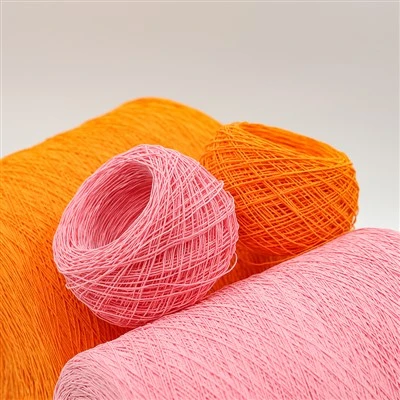
If you’re an automotive interior designer, a upholstery manufacturer, or an automaker looking to upgrade your vehicle’s interior, let’s talk. We can share test data, send you swatches, and work with your team to tailor a functional yarn solution that fits your specific needs and budget. There’s no one-size-fits-all, but when you pair the right functional yarn with the right automotive application, the results speak for themselves.
Sustainable Yarns References
- Automotive Aftermarket Suppliers Association. (2022). 2022 Upholstery Repair and Maintenance Industry Report.
- J.D. Power. (2023). U.S. Automotive Interior Satisfaction Study.
- AATCC Technical Manual. (2021). Test Method 186: Colorfastness to Light: Water-Cooled Xenon Arc Lamp.
- National Highway Traffic Safety Administration. (2022). Vehicle Interior Material Durability and Safety Standards.
- Textile Institute. (2023). Functional Yarns for Industrial Applications: Automotive and Aerospace Use Cases.
Dongguan Jintai Textile Technology Co., Ltd.
As one of the most professional functional yarns manufacturers and suppliers in China, we offer a wide range of products with superior quality. With abundant experience, we warmly welcome you to wholesale high quality functional yarns in stock here and get free sample from our factory. We also accept customized orders.
Address: No. 22 Fukang Road, Dalang, Dalang Town, Dongguan City, Guangdong Province
E-mail: 13553898187@163.com
WebSite: https://www.jintaitextile.com/
