Alright, let’s cut to the chase—if you’ve ever worked with drilling rigs (or even just watched a little oil and gas content online), you know saltwater-bearing formations aren’t just a “minor hiccup.” They’re the kind of problem that can shut down a job, fry your equipment, and eat into your profits faster than a rig crew skipping lunch. As a drilling rig supplier, I get so many questions about how to handle these formations that I thought I’d break it down straight, no boring jargon overload. Drilling Rig
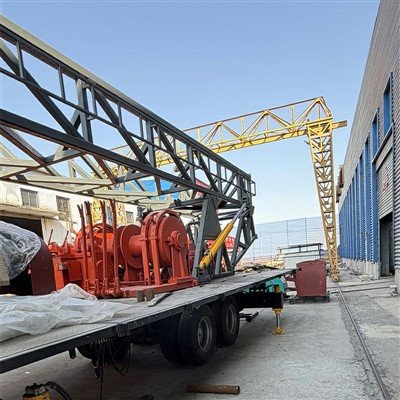
First, let’s be real: what even is a saltwater-bearing formation? Think layers of rock underground (sandstone, limestone, shale) that are filled with salty brine—we’re talking way saltier than ocean water, sometimes 5 times more. When you drill into these, the saltwater wants to rush up your wellbore like a geyser. But why does that matter? It’s not just a mess. That brine can corrode your rig’s metal parts (pipes, pumps, valves) so bad they’ll fail mid-drill. It can also mess up your drilling fluid (mud) — the stuff that cools your bit, carries cuttings up, and keeps pressure stable. If saltwater mixes in, your mud can thicken into a sludge or turn runny as watered-down juice, neither of which works. Plus, salt crystals can clog your bit’s nozzles, making your drill slow to a crawl.
So, how do rigs actually handle this? Let’s walk through the main steps, the kind of stuff we teach our rig operators when they pick up a new machine from us.
First up: Wellbore Pressure Management. This is the big one, and it all starts with drilling fluid. We don’t just use regular mud here—we use heavy mud with a high density. Density is key because we need the mud’s pressure to match (or be just a tiny bit higher than) the pressure of the saltwater formation. That way, the saltwater can’t rush into the wellbore. But wait, how do we calculate that density? It’s basic but critical: you test the formation pressure before drilling into the salt layer using tools like a logging while drilling (LWD) tool. LWD is a device that rides with your drill bit, sends real-time data up to your rig’s screen, so you don’t have to wait to pull the bit to check. If you skimp here—say, use mud that’s too light—boom, you get a kick, which is saltwater pushing into the well. If it’s too heavy, you might fracture the rock around the well, and that’s its own nightmare (lost circulation, where your mud disappears into the cracks).
But what if you do get a kick? Rigs have blowout preventers (BOPs) for a reason. BOPs are these massive, hydraulically powered valves that clamp down on your drill pipe instantly to seal the wellbore. Our rigs come with upgraded BOPs specifically rated for saltwater formations—standard BOPs might not handle the extra pressure spikes from brine. The BOP will hold the well closed while you circulate out the saltwater, replacing it with fresh mud that’s the right density. That’s a tight spot, but modern rigs make this way faster than it used to be.
Next: Corrosion Control. Saltwater is basically liquid rust for metal parts. The brine has high concentrations of chloride ions, which eat away at steel like nothing else. So we add corrosion inhibitors to your mud, but not just any inhibitors—we use ones that work in high-salinity environments. On our rigs, we also have internal coating for the mud tanks and pipe racks. Wait, no—we don’t just coat the tanks; some of our higher-end rigs have cathodic protection for the drill string. That’s a fancy way of saying we add a small electric charge to the steel pipes to stop the chemical reaction that causes rust. It’s like a shield, and it’s way more effective than just slathering on paint. We’ve had customers tell us this cuts pipe corrosion by 70% in saltwater zones—game changer.
Then there’s Drilling Fluid Adjustments beyond just density. Sometimes, even heavy mud can react with saltwater. If your mud has polymers (the stuff that makes it thick), salt can break those polymers apart, making the mud runny. So we add salt-tolerant polymers instead. These are molecules that don’t dissolve when they hit brine. We also use brine-based mud as a last resort—instead of water, the mud is made with saltwater from the formation, so it doesn’t react when you drill in. It’s more expensive, but it’s the only way to keep mud properties stable in super salty zones. Our team can help you switch to brine-based mud on the fly if your LWD picks up a salt formation unexpectedly—we’ve built quick-change kits right into our rig control panels for that.
Wait, another thing: Cuttings Management. When you drill, you pull up rock cuttings, and saltwater can get stuck in those. If you don’t clean the cuttings properly, the salt can crystallize, get everywhere, and corrode the rig’s shakers (the machines that separate cuttings from mud). On our rigs, we have high-efficiency shale shakers with fine mesh screens that catch even tiny salt crystals. We also have a cuttings drying unit that removes excess brine before you haul the cuttings away—no more salt residue caking on your rig’s equipment.
Now, let’s talk about real-world mistakes we’ve seen. A customer last year used a standard BOP on their rig in a saltwater formation in the Gulf of Mexico. They got a kick, the BOP couldn’t seal right, and saltwater flooded the rig’s control panel. They had to shut down for 3 days to fix it—cost them like $150k in downtime. That’s why we sell rigs with BOPs rated for 10k psi (pounds per square inch) minimum, specifically for high-pressure salt zones. We also offer on-site training for every operator who buys our rigs—we walk them through how to test mud density, adjust inhibitors, and respond to a kick before it becomes a disaster.
But here’s the thing: no rig is 100% ready for every saltwater formation. It’s about adapting. Our rigs are modular, so you can add or remove equipment like corrosion inhibitors tanks, upgraded BOPs, or brine mud mixing units depending on the job. If you’re working in a shallow salt formation vs. a deep, high-pressure one, you don’t need the same setup. That’s the advantage of buying from a supplier who listens—we don’t push a one-size-fits-all rig; we help you build the one that fits your specific saltwater project.
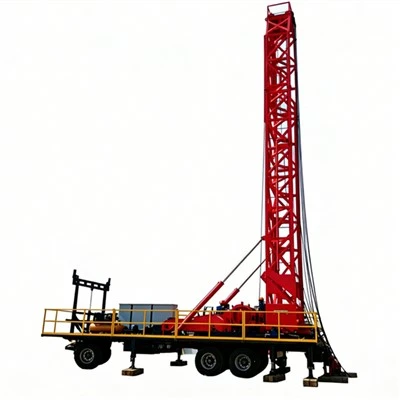
So, if you’re a rig operator, drilling contractor, or anyone dealing with saltwater formations, you know the key isn’t just having a rig—it’s having a rig that’s built to handle the brine. If you’re tired of dealing with corroded pipes, lost mud, or costly downtime, let’s talk. Our team can walk you through our rig options, show you the upgrades we have for saltwater projects, and help you put together a plan to handle whatever briny formation you hit.
Water Well Drilling Rig References
- SPE (Society of Petroleum Engineers). (2018). Drilling Fluid Design for High-Salinity Formations. Journal of Petroleum Technology, 70(5), 45–52.
- American Petroleum Institute (API). (2020). Recommended Practice for Well Control Operations (RP 53), 4th Edition. API Publishing Services.
- Corrosion Science Association. (2019). Chloride-Induced Corrosion in Oilfield Equipment. Corrosion Engineering, 32(2), 112–118.
- International Association of Drilling Contractors (IADC). (2021). Rig Equipment Guidelines for High-Pressure Subsea Formations. IADC Technical Bulletin.
Hebei Zhongxin Machinery Equipment Co., Ltd.
As one of the most experienced drilling rig manufacturers in China, we also support customized service. We warmly welcome you to buy high quality drilling rig for sale here from our factory. If you have any enquiry about pricelist, please feel free to email us.
Address: Wangxizhang Industrial Zone, Zhao County, Shijiazhuang City, Hebei Province, China
E-mail: zxnjbzg@163.com
WebSite: https://www.hbzxdrilling.com/
