As a seasoned supplier of toroidal inductors, I’ve witnessed firsthand the growing demand for components with higher power – handling capacities. In various industries, such as power electronics, renewable energy systems, and telecommunications, the need for toroidal inductors that can handle more power is ever – present. In this blog, I’ll share some practical strategies and considerations on how to increase the power – handling capacity of a toroidal inductor. Toroidal Inductor
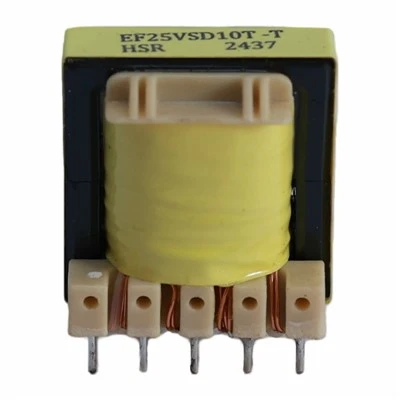
Understanding the Basics of Toroidal Inductors
Before delving into the ways to increase power – handling capacity, it’s essential to understand the fundamental principles of toroidal inductors. A toroidal inductor consists of a coil of wire wound around a toroidal (doughnut – shaped) core. The core material and the winding configuration play crucial roles in determining the inductor’s performance, including its power – handling ability.
The power – handling capacity of an inductor is mainly limited by two factors: core losses and copper losses. Core losses occur due to hysteresis and eddy currents within the core material. Hysteresis losses are the result of the energy dissipated when the magnetic field in the core is reversed. Eddy current losses are caused by the circulating currents induced in the core due to the changing magnetic field. Copper losses, on the other hand, are the resistive losses in the wire used for winding the inductor, which are proportional to the square of the current flowing through the wire and the resistance of the wire.
Selecting the Right Core Material
One of the most effective ways to increase the power – handling capacity of a toroidal inductor is to choose the appropriate core material. Different core materials have different magnetic properties, which directly affect the inductor’s performance.
Ferrite Cores
Ferrite is a popular choice for toroidal inductors due to its high magnetic permeability and low core losses at high frequencies. Ferrite cores are made of a ceramic – like material composed of iron oxide and other metal oxides. They are available in various types, such as manganese – zinc (Mn – Zn) and nickel – zinc (Ni – Zn) ferrites.
Mn – Zn ferrites have high permeability and low coercivity, making them suitable for applications with low – to – medium frequencies (up to a few MHz). They can handle relatively high magnetic fluxes, which is beneficial for increasing the power – handling capacity. Ni – Zn ferrites, on the other hand, have lower permeability but higher resistivity, which reduces eddy current losses at higher frequencies (above a few MHz).
Powdered Iron Cores
Powdered iron cores are made by compressing iron powder particles together with an insulating binder. These cores offer a wide range of permeability values and are known for their high saturation flux density. They can handle high currents without saturating easily, making them ideal for high – power applications. Powdered iron cores also have relatively low core losses at moderate frequencies, which helps in increasing the overall power – handling capacity of the inductor.
Amorphous and Nanocrystalline Cores
Amorphous and nanocrystalline cores are advanced magnetic materials that offer excellent magnetic properties. Amorphous cores have a disordered atomic structure, which results in very low hysteresis losses. Nanocrystalline cores, on the other hand, have a fine – grained structure that combines the high permeability of amorphous materials with the high saturation flux density of traditional magnetic materials. These cores are suitable for high – frequency, high – power applications where minimizing core losses is crucial.
Optimizing the Winding Configuration
In addition to selecting the right core material, optimizing the winding configuration of the toroidal inductor is also essential for increasing its power – handling capacity.
Increasing the Number of Turns
The inductance of a toroidal inductor is proportional to the square of the number of turns in the coil. By increasing the number of turns, the inductance of the inductor can be increased, which in turn can increase the amount of energy that the inductor can store. However, increasing the number of turns also increases the resistance of the wire, which leads to higher copper losses. Therefore, a balance needs to be struck between increasing the inductance and minimizing the copper losses.
Using Larger – Gauge Wires
The resistance of a wire is inversely proportional to its cross – sectional area. Using larger – gauge wires in the winding can significantly reduce the copper losses, especially in high – current applications. Larger – gauge wires have lower resistance, which allows more current to flow through the inductor without excessive heating. However, using larger – gauge wires also increases the size and cost of the inductor, so the trade – offs need to be considered.
Ensuring Proper Winding Techniques
Proper winding techniques are crucial for ensuring the performance and reliability of the toroidal inductor. The turns should be evenly spaced and tightly wound to minimize the distributed capacitance and inductance variation. Additionally, the winding should be insulated properly to prevent short – circuits and to ensure the safety of the inductor.
Thermal Management
Thermal management is another critical aspect of increasing the power – handling capacity of a toroidal inductor. As the inductor dissipates power in the form of heat due to core losses and copper losses, effective heat dissipation is necessary to prevent overheating, which can degrade the performance of the inductor and even lead to its failure.
Using Heat Sinks
Heat sinks are passive cooling devices that can be attached to the toroidal inductor to increase its surface area for heat dissipation. The heat sink absorbs the heat generated by the inductor and transfers it to the surrounding air. Heat sinks can be made of materials such as aluminum or copper, which have high thermal conductivity.
Improving Airflow
Improving the airflow around the toroidal inductor can also enhance its heat dissipation efficiency. This can be achieved by using fans or by designing the enclosure in a way that allows for natural convection. Adequate ventilation holes can be provided in the enclosure to ensure that the hot air can escape and be replaced by cool air.
Thermal Conductive Materials
Using thermal conductive materials between the inductor and the heat sink or the enclosure can improve the heat transfer process. Thermal pads or thermal greases with high thermal conductivity can be used to fill the gaps between the surfaces and reduce the thermal resistance.
Design for Applications
When aiming to increase the power – handling capacity of a toroidal inductor, it’s also important to design the inductor according to the specific application requirements.
Frequency Considerations
The frequency of the application has a significant impact on the performance of the toroidal inductor. Different core materials have different optimal frequency ranges, and the winding configuration may also need to be adjusted accordingly. For high – frequency applications, materials with low eddy current losses, such as Ni – Zn ferrites or nanocrystalline cores, should be used. For low – frequency applications, Mn – Zn ferrites or powdered iron cores may be more suitable.
Current and Voltage Ratings
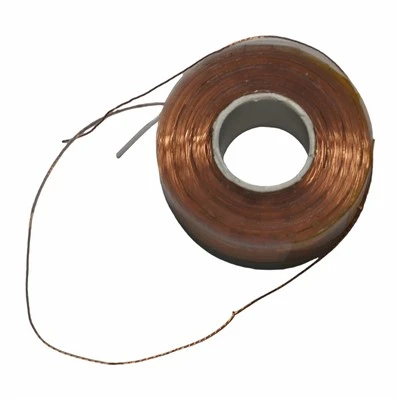
The current and voltage ratings of the application determine the maximum power that the inductor needs to handle. The inductor should be designed to withstand the maximum current and voltage without saturating or breaking down. The wire gauge and the number of turns should be selected based on the expected current and voltage levels.
Power Transformer If you are in need of high – power toroidal inductors or have specific requirements regarding power – handling capacity, I invite you to reach out for a detailed discussion. Our team of experts is ready to help you find the most suitable toroidal inductor solutions for your applications.
References
- "Inductor Design Handbook", Powder Sales Co., Inc.
- "Magnetic Materials and Their Applications", C. P. Bean and J. D. Livingston
- "Fundamentals of Power Electronics", Robert W. Erickson and Dragan Maksimovic
Dongguan Hensiron Electric Co., Ltd.
As one of the most professional toroidal inductor suppliers in China, we have world-leading production equipment and strong manufacturing capabilities. Please feel free to buy high quality toroidal inductor made in China here from our factory. Customized orders are welcome.
Address: Building 4, Xinxing Industrial Zone, Wangao Road, Wanjiang Street, Dongguan City, China
E-mail: jessica@dghensiron.com
WebSite: https://www.dghensiron.com/
