Is titanium wire for fasteners brittle or ductile? Titanium Wire for Fastener

As a supplier of titanium wire for fasteners, I often encounter this question from customers. The answer is not as straightforward as one might think, as it depends on several factors. In this blog post, I will delve into the properties of titanium wire, explore the concepts of brittleness and ductility, and discuss how these characteristics impact the performance of fasteners.
Understanding Titanium Wire
Titanium is a lightweight, strong, and corrosion-resistant metal that has gained popularity in various industries, including aerospace, automotive, and marine. Titanium wire is commonly used for fasteners due to its high strength-to-weight ratio and excellent resistance to fatigue and corrosion.
There are different grades of titanium wire, each with its own unique properties. The most common grades used for fasteners are Grade 2 and Grade 5. Grade 2 titanium is pure titanium and is known for its good formability and corrosion resistance. Grade 5 titanium, also known as Ti-6Al-4V, is an alloy that contains 6% aluminum and 4% vanadium. It is stronger and more heat-resistant than Grade 2, making it suitable for applications where high strength is required.
Brittleness vs. Ductility
Before we can determine whether titanium wire for fasteners is brittle or ductile, it is important to understand the concepts of brittleness and ductility.
Brittleness is the tendency of a material to break or fracture without significant deformation. A brittle material will typically fail suddenly and without warning when subjected to stress. Examples of brittle materials include glass, ceramics, and some types of cast iron.
Ductility, on the other hand, is the ability of a material to deform plastically under stress without breaking. A ductile material can be stretched, bent, or shaped without fracturing. Examples of ductile materials include metals such as copper, aluminum, and steel.
Factors Affecting the Brittleness or Ductility of Titanium Wire
The brittleness or ductility of titanium wire for fasteners can be influenced by several factors, including:
- Grade of Titanium: As mentioned earlier, different grades of titanium have different properties. Grade 2 titanium is generally more ductile than Grade 5 titanium, which is stronger but less ductile.
- Heat Treatment: Heat treatment can significantly affect the properties of titanium wire. Annealing, for example, can improve the ductility of titanium wire by reducing internal stresses and increasing the grain size. On the other hand, quenching and tempering can increase the strength of titanium wire but may also make it more brittle.
- Cold Working: Cold working, such as drawing or rolling, can increase the strength of titanium wire but may also reduce its ductility. This is because cold working introduces dislocations and other defects in the crystal structure of the material, which can make it more prone to cracking and fracture.
- Impurities: The presence of impurities in titanium wire can also affect its brittleness or ductility. For example, the presence of oxygen, nitrogen, or carbon can make titanium wire more brittle.
Is Titanium Wire for Fasteners Brittle or Ductile?
In general, titanium wire for fasteners is considered to be ductile. However, the degree of ductility can vary depending on the grade of titanium, the heat treatment, and the cold working process.
Grade 2 titanium wire is known for its good formability and ductility, making it suitable for applications where the fasteners need to be bent or shaped. Grade 5 titanium wire, on the other hand, is stronger but less ductile. It is typically used for applications where high strength is required, such as in aerospace and automotive industries.
Heat treatment can also play a significant role in the ductility of titanium wire. Annealed titanium wire is generally more ductile than as-rolled or cold-worked wire. Quenching and tempering can increase the strength of titanium wire but may also make it more brittle.
Cold working can increase the strength of titanium wire but may also reduce its ductility. Therefore, it is important to carefully control the cold working process to ensure that the fasteners have the desired strength and ductility.
Impact on Fastener Performance
The brittleness or ductility of titanium wire can have a significant impact on the performance of fasteners. A brittle fastener is more likely to break or fracture under stress, which can lead to failure of the joint. On the other hand, a ductile fastener can deform plastically under stress, which can help to distribute the load and prevent failure.
In applications where the fasteners are subjected to high stress or cyclic loading, it is important to use a ductile material to ensure the reliability and safety of the joint. For example, in aerospace and automotive industries, where the fasteners are exposed to high temperatures, vibrations, and other harsh conditions, ductile titanium wire is often used to ensure the integrity of the joints.
Conclusion
In conclusion, titanium wire for fasteners is generally considered to be ductile, but the degree of ductility can vary depending on several factors, including the grade of titanium, the heat treatment, and the cold working process. It is important to carefully select the appropriate grade of titanium and to control the manufacturing process to ensure that the fasteners have the desired strength and ductility.
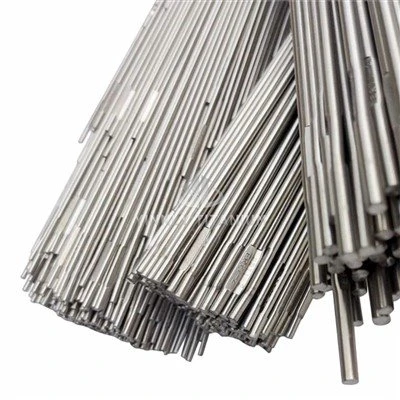
As a supplier of titanium wire for fasteners, I am committed to providing high-quality products that meet the needs of my customers. If you are interested in purchasing titanium wire for fasteners or have any questions about the properties and performance of titanium wire, please feel free to contact me. I would be happy to discuss your requirements and provide you with the information and support you need.
Titanium Square Bar References
-ASM Handbook, Volume 2: Properties and Selection: Nonferrous Alloys and Special-Purpose Materials. ASM International, 2001.
-Titanium: A Technical Guide. John R. Davis, ed. ASM International, 1994.
-Mechanical Properties of Engineering Materials. William F. Smith and Javad Hashemi. McGraw-Hill, 2005.
Baoji Yinnly Titanium Co., Ltd.
Baoji Yinnly Titanium Co., Ltd. is one of the most professional titanium wire for fastener manufacturers and suppliers in China, featured by quality products and good service. Please rest assured to buy bulk titanium wire for fastener in stock here and get quotation from our factory. Customized orders are welcome.
Address: Unit 902, Building 1, Creative Building, No. 195, Gaoxin Avenue, High-tech Zone, Baoji City, Shaanxi Province
E-mail: anna@yinnlyti.com
WebSite: https://www.yinnlyti.com/
