Are cross line lasers suitable for marine applications? Cross Line Lasers

When I first started supplying cross line lasers to industries beyond construction, I’ll admit I didn’t give marine applications much thought. Back then, my focus was on helping carpenters, drywall installers, and kitchen fitters align walls, cabinets, and tiles—spaces where a steady, indoor power source and relatively stable conditions make laser leveling a no-brainer. But over the past five years, I’ve gotten more questions from boat builders, yacht refit teams, and even commercial fishing vessel maintenance crews asking if these same tools work on saltwater, rocking decks, and tight, wet hull spaces. The answer isn’t a simple “yes” or “no”—it depends on what kind of marine work you’re doing, and how you match your laser to the harsh conditions of life on the water.
First, let’s break down why marine environments are so tough on tools. Unlike a job site in a suburban home, a boat or yacht deals with constant vibration from engines and waves, extreme temperature swings (from cold northern waters to scorching tropical seas), and direct exposure to salt spray and humidity. Salt is the silent killer here: even a small amount of salt residue can corrode a laser’s internal circuitry over time, shorting it out or distorting its line accuracy. Vibration, too, can knock a laser’s leveling mechanism out of calibration, turning a straight line into a wobbly mess that’s useless for installing bulkheads or decking. Humidity, meanwhile, can fog up the laser’s window, reducing visibility of the line and making it hard to work in enclosed spaces like a head or cabin.
That said, not all cross line lasers are created equal. As a supplier, I’ve seen a huge difference between entry-level, budget-priced lasers and industrial-grade models designed for rugged use. Let’s start with the basics of what a cross line laser does: it projects two perpendicular, bright lines (usually horizontal and vertical) that act as a reference for alignment, leveling, or cutting. For marine work, these lines need to be consistent—even when the boat is rocking slightly—and the tool itself needs to hold up to the elements.
Take a recent customer, a small yacht refit company based in Florida. They were installing new teak decking on a 60-foot sailboat, a job that requires every plank to be perfectly aligned to prevent water from seeping into the seams. Early on, they tried a cheap, consumer-grade cross line laser they’d borrowed from a friend. Within an hour, the vibration from the sailboat’s generator had thrown the laser’s self-leveling system off, and the line was off by nearly half an inch. That mistake cost them an extra day of work and a few planks they had to cut down to fix the alignment. When they switched to an industrial-grade cross line laser I supply—one with a sealed, IP67-rated housing—it worked perfectly. The IP67 rating means it’s dust-tight and can be submerged in up to a meter of water for 30 minutes, which is more than enough to handle accidental salt spray or a quick wipe down with a damp cloth. The self-leveling system was also designed to compensate for small angles (up to 4 degrees, typical for a boat at anchor) without losing accuracy, so even when the boat rocked in the harbor, the line stayed straight.
But marine applications aren’t just about decking. There are plenty of other jobs where cross line lasers add value, if you pick the right tool. For example, building a custom bulkhead in a sailboat’s cabin: not only does the bulkhead need to be level to sit flush against the hull, but it also has to align with the boat’s existing structural supports. A cross line laser can project a vertical line to mark where the bulkhead should run, and a horizontal line to make sure it’s level, eliminating the need for a bubble level that’s hard to read in tight, dim spaces. Another use is installing plumbing or electrical runs in a yacht’s hull: running a wire or pipe along a straight, level line prevents it from kinking, which saves time and reduces the risk of leaks or electrical issues down the line. Commercial fishing vessels, too, use cross line lasers to align new bait tanks or repair deck hatches, where accuracy and durability are key.
Of course, there are limits. Cross line lasers won’t work well for every marine task. If you’re working on the open ocean, where a boat is rocking constantly (more than 4 degrees from level), even the best self-leveling laser will struggle to keep a straight line—you’d need a manual leveling laser that you can adjust manually as the boat moves, or a rotary laser designed for larger spaces. Also, in areas with bright sunlight, like an open deck during the day, a standard red cross line laser might be too faint to see. That’s why I always recommend green lasers for outdoor or bright environments: green light is twice as bright as red light at the same power, so you can see the line clearly even in direct sunlight without cranking up the power, which would shorten battery life. For enclosed, dim spaces like a hull compartment, a red laser is fine, as it’s still bright enough to see and uses less power.
Another factor to consider is battery life. Marine work often means you’re away from power sources for long stretches—especially if you’re working on a remote island refit or a fishing trip where you need to do repairs on the water. Entry-level lasers use disposable batteries that die after a few hours, but industrial cross line lasers designed for marine use often have long-lasting lithium-ion batteries that can run for 12+ hours on a single charge, and some even have a USB port for charging from a boat’s 12V system. That’s a game-changer for anyone working on a boat without easy access to a wall outlet.
I’ve also learned a few lessons over the years about maintaining lasers in marine environments. Even if you buy a rugged model, salt spray can still build up on the laser’s lens or housing over time. I always advise customers to wipe down their laser with a fresh water-soaked cloth after each use, then dry it thoroughly to prevent corrosion. Don’t use harsh chemicals, though—they can damage the laser’s seal or lens coating. Also, store the laser in a dry, climate-controlled space when it’s not in use; leaving it in a hot, humid engine room overnight can cause internal condensation, which can damage the circuitry.
One common misconception I hear is that marine tools have to be “specialty” and way more expensive than standard tools. While industrial-grade cross line lasers do cost a bit more than consumer models, the savings in time and materials make them worth it. Let’s go back to that Florida refit company: their first laser mistake cost them $500 in extra planks and a day of labor. When they switched to the laser I supply, they finished the decking job two days ahead of schedule, saving them over $2,000 in labor costs. That’s a clear return on investment. For smaller jobs, like installing a vanity in a boat’s head, a mid-range industrial cross line laser is still affordable—way cheaper than hiring a professional to do the alignment for you, and much more accurate than using a bubble level and a tape measure.
I’ve also worked with a few custom boat builders who use cross line lasers for large-scale projects, like aligning the hull’s stringers. Stringers are the structural beams that run along the inside of a boat’s hull, and they have to be perfectly level and aligned to support the deck and superstructure. Before lasers, builders used a long string and a plumb bob, a method that’s slow and prone to human error. Now, they use two cross line lasers at either end of the hull to project straight lines, and the stringers are cut to align with those lines. This cuts the alignment time from a week to a few days, and reduces the number of mistakes that require rework.
Of course, there are still challenges. If you’re working on a metal hull, some lasers can have trouble projecting a clear line because the metal reflects the laser light. For that, I recommend using a laser level with a high-quality lens and a strong diode, which produces a more concentrated line that’s easier to see on metal. Alternatively, you can use a laser target—a small, adhesive sheet that’s designed to make the laser line visible on dark or reflective surfaces. That’s a cheap accessory that makes a big difference in marine metalworking.
Another thing to consider is certification. Some marine projects, especially commercial ones, require tools that meet certain industry standards for accuracy and durability. The cross line lasers I supply are calibrated to meet ISO 9001 standards, which means their accuracy is within 1/8 of an inch at 30 feet—more than enough for any marine alignment job. They also have a water resistance rating that meets marine industry requirements, so you don’t have to worry about them failing a safety inspection.
So, to circle back to the original question: are cross line lasers suitable for marine applications? The short answer is yes, if you choose the right model and use it for the right tasks. They’re not a replacement for every marine tool, but they’re far more versatile and accurate than traditional methods for alignment and leveling jobs. Whether you’re a small refit company, a custom boat builder, or a commercial fisherman doing repairs on your vessel, a cross line laser can save you time, reduce mistakes, and make jobs that were once tedious and difficult much easier.
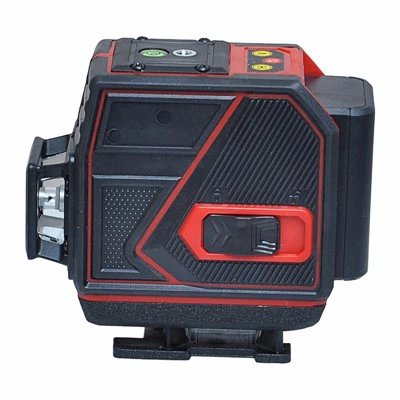
If you’re in the marine industry and looking to upgrade your alignment tools, or you have questions about which cross line laser is right for your specific job, feel free to reach out. I’ve worked with dozens of boat builders, refit crews, and marine maintenance teams, and I can help you pick a model that fits your budget and your unique needs. Don’t waste another day struggling with wobbly lines or rework—let’s find the right laser for your marine project.
Line Laser References
- International Organization for Standardization (ISO) 9001:2015, Quality Management Systems – Requirements
- IP Rating Standards, International Electrotechnical Commission (IEC) 60529
- Marine Industry Tool Durability Guidelines, National Marine Manufacturers Association (NMMA) 2022
- Laser Level Accuracy Standards, American National Standards Institute (ANSI) B107.59-2021
Nantong Jiadebao Optoelectronic Technology Co., Ltd.
Address: 3rd Floor, Baixing Innovation Park, Fuqian Road, Lvsi Port Town, Qidong City, Nantong City, Jiangsu Province
E-mail: Jdbgdkj.alex@outlook.com
WebSite: https://www.jdbgdkj.com/
