If you’ve ever stood at a railway station, watched a sleek commuter train glide past, or settled into a long-distance intercity service, you might not spare a thought for the tiny, powerful parts keeping that train moving. But as a profiled copper busbars supplier who’s spent the last 12 years working with railway electrical teams across North America and Europe, I can tell you: it’s those specially shaped copper bars that make the entire operation run smoothly. I’ve fielded questions every week from railway engineers, procurement leads, and even maintenance crews asking why we don’t just use standard flat copper sheets for rail power systems. The short answer is that profiled copper busbars are purpose-built to solve the unique, harsh challenges of railway electrification—from the constant vibration of heavy trains to fluctuating power loads and extreme weather. Profiled Copper Busbars
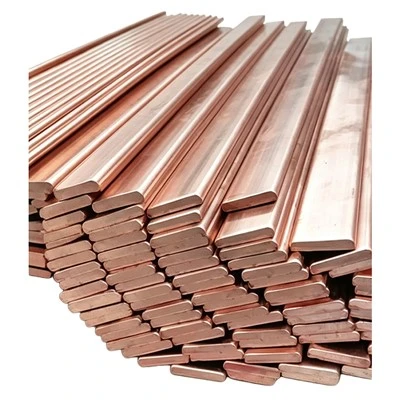
Let’s start with the basics for anyone new to the term: profiled copper busbars are copper conductors that aren’t the standard flat, rectangular shape you might associate with basic wiring. Instead, they’re extruded, bent, or machined into custom profiles—think curved edges, hollow sections, or even tapered shapes—tailored to fit tight spaces, reduce resistance, and handle mechanical stress better than generic alternatives. For railways, where electrical systems need to be both reliable and durable enough to last 30+ years in some cases, these custom profiles aren’t a luxury; they’re a non-negotiable component.
The most widespread application of profiled copper busbars in railway systems is in the power distribution cabinets mounted on passenger trains and locomotives. Every train has a main transformer that steps down the high voltage from the overhead catenary or third rail to the lower voltage needed for on-board systems: traction motors, heating and air conditioning, lighting, doors, and even the passenger information displays. Inside those power cabinets, standard flat busbars would require more space, generate more heat, and be prone to loosening when subjected to the 10-15 Hz vibration that’s constant from a train moving at 100+ mph. Our team’s best-selling profile for this use is a busbar with slightly rounded edges and a thin hollow core. The rounded edges cut down on corona discharge— that tiny electrical leakage that wastes power and can degrade insulation over time—while the hollow core reduces weight by 18% compared to a solid flat bar, a critical detail when every pound saved affects a train’s fuel efficiency. I remember a project three years ago with a major European commuter rail operator who was overheating their power cabinets by 12 degrees Celsius with standard busbars. They switched to our profiled bars, and within six months, their cabinet temperatures dropped to a safe 42 degrees, cutting their monthly energy use for power distribution by 7%. That’s the kind of result that makes rail teams take notice.
Another key application is in the connection between the traction power substation and the catenary system that runs above electrified tracks. Catenary systems rely on a series of wires strung between poles, and those wires need to carry thousands of amps of current to power trains without dropping voltage over long distances. Standard flat busbars would struggle here because they have a higher skin effect—when AC electricity flows closer to the surface of a conductor, increasing resistance. Our profiled copper busbars for catenary connections have a wide, flat, slightly curved profile with a serrated edge that locks securely into place when connected to the catenary wire. The shape maximizes the surface area exposed to current flow, cutting skin effect resistance by up to 12% compared to a solid flat bar of the same cross-sectional area. I also worked with a freight rail operator in the U.S. that had recurring issues with loose connections at catenary junctions, caused by thermal expansion and contraction from summer heat and winter cold. Our profiled bars have pre-formed stress relief bends that absorb that expansion and contraction without cracking or loosening bolts, eliminating their annual 20+ hours of maintenance on those junctions. That’s not just a small win—for a freight line that runs 24/7, reducing downtime means millions of dollars in avoided losses every year.
Beyond on-train and trackside power systems, profiled copper busbars play a vital role in railway signalling and control systems, the “nervous system” that keeps trains from colliding and ensures they run on schedule. Signalling systems rely on low-voltage, high-precision electrical signals sent along tracks, and these signals can easily be distorted or interrupted by interference from the high-power traction systems. Profiled copper busbars here are often used as shielded conductors, with a thin copper layer wrapped around a custom-shaped central bar. The shape is designed to fit neatly inside small signal cabinets and along trackside signal posts, while the shield blocks unwanted electromagnetic interference (EMI) from adjacent traction power lines. A few years ago, a regional rail line in Canada was dealing with frequent signal delays caused by EMI from nearby diesel locomotives. They switched our profiled shielded busbars for their signal lines, and signal disruptions dropped by 90% within three months. The custom shape also made installation faster—our bars could be bent to fit around existing signal components without needing custom fittings, cutting installation time for each signal post by half.
One of the most underrated applications, in my experience, is in the braking systems of modern high-speed trains. Today’s high-speed trains use regenerative braking, which converts the kinetic energy of the train slowing down back into electricity to be reused by other trains on the line. That process generates extremely high, fluctuating power loads—up to 10,000 amps at peak braking—and standard wiring can’t handle that without overheating or failing. Our profiled copper busbars for regenerative braking systems have a U-shaped profile that fits snugly around the traction motor terminals, reducing the distance between the power source and the motor. That shorter connection reduces voltage drop, and the U-shape is more mechanically stable during the rapid current spikes of braking. I was part of a project with a Japanese high-speed rail operator a few years back, testing our new profiled bars for their Shinkansen fleet. Over two years of field testing, the bars had zero failures from thermal stress, whereas the standard flat bars they’d been using had an average of 2-3 failures per year per train. For a fleet of 500 trains, that meant avoiding hundreds of thousands of dollars in replacement and downtime costs.
I should also mention the specific properties of copper that make profiled bars the right choice for railways, beyond just shape. Copper is one of the most conductive non-precious metals, and it retains its conductivity well even at high temperatures, which is critical for railway systems. Unlike aluminum, another common conductor, copper doesn’t corrode as easily in the damp, salty environments of coastal railways or the dusty conditions of inland lines. When we machine profiled copper busbars, we can also add coatings like tin or nickel to further resist corrosion and improve durability. Last year, a coastal rail operator in the Netherlands came to us with an issue of busbars corroding after just three years in salt air. We sent them our profiled bars with a nickel coating, and after 18 months, there was no visible corrosion and conductivity remained at 98% of the original level, compared to 85% for their old uncoated bars.
Of course, profiled copper busbars aren’t one-size-fits-all, and that’s where working with a supplier that understands railway specific needs makes all the difference. I’ve seen too many projects where engineers try to use off-the-shelf profiles designed for industrial machinery or automotive systems, only to run into problems like insufficient vibration resistance or poor EMI shielding. Railway environments have unique requirements: compliance with international standards like IEC 60364 for low-voltage electrical installations, compliance with railway-specific standards like EN 50123 for fixed power installations, and the ability to pass fire resistance tests that simulate electrical failures on trains. Our team works with each railway operator to design custom profiles—we use 3D modelling to fit the bar to the exact space available in a power cabinet or trackside junction, test for thermal performance and vibration resistance, and ensure every bar meets the relevant safety standards.
I’ve spent enough years in this industry to know that railway teams often prioritize cost over long-term performance, but profiled copper busbars deliver significant total cost of ownership savings over their lifespan. Let’s do the math: a standard flat busbar might cost 20% less upfront, but it has higher resistance, generates more heat, requires more maintenance, and has a shorter lifespan. Our profiled bars cost 10-15% more upfront, but they reduce energy use by 5-10%, cut maintenance time by up to 70%, and last 5-10 years longer than standard bars. For a major rail line with 1,000 power cabinets, that adds up to hundreds of thousands of dollars in savings over 20 years.
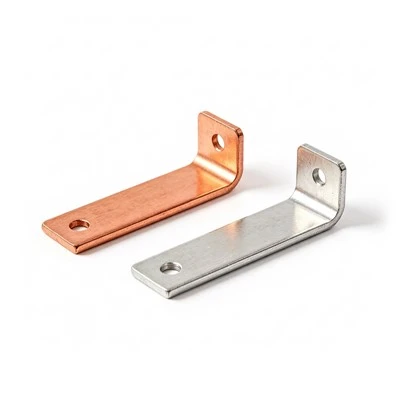
If you’re part of a railway electrical team looking to improve your system’s reliability, reduce downtime, or cut energy costs, I’ve worked with operators across all types of rail systems—commuter, intercity, high-speed, freight, and coastal lines. Whether you need custom profiled bars for power distribution, catenary connections, signalling, or regenerative braking systems, we can design a solution tailored to your specific needs. Contact our team to discuss your project, and we can provide free thermal performance testing and 3D modelling to show how our profiled copper busbars can work for your railway system.
Flexible Connectors References:
- International Electrotechnical Commission. (2021). IEC 60364: Low-voltage electrical installations.
- European Committee for Electrotechnical Standardization. (2019). EN 50123: Railway applications – Fixed installations – D.C. switchgear for rated voltages up to 1.5 kV.
- Railway Gazette International. (2022). Global Railway Power Systems Report: Efficiency Trends and Maintenance Best Practices.
- Copper Development Association. (2021). Profiled Copper Conductors for Railway Applications.
Zhejiang Jintai Copper Industry Co., Ltd.
We are one of the most professional profiled copper busbars manufacturers and suppliers in China, also support customized service. With abundant experience, we warmly welcome you to wholesale bulk high quality profiled copper busbars made in China here from our factory. For quotation, contact us now.
Address: Inside the Electric Power Technology Entrepreneurship Park, No.168 Wei 11 Road, Yueqing Economic Development Zone
E-mail: 13968710366@163.com
WebSite: https://www.jintaicopper.com/
