Hey everyone! It’s Mia from the Solar Landscaping Light team, and today I’m tackling a question I get all the time from landscape designers, backyard hobbyists, and even my neighbor who’s been messing with their pond for months: Are there actually solar landscape lights that work underwater? Solar Landscaping Light

First off, I used to be skeptical too. A few years back, I tested a random “waterproof” solar light I found online for our own display pond—within 24 hours, it was dead, filled with murky water, and the solar panel on top was corroded. I felt so silly for buying a cheap knockoff, and that moment made me dive deep (pun absolutely intended) into figuring out what makes a solar light suitable for underwater use. No more guessing, no more wasting money on stuff that’s not built to last.
Let’s break this down science-style, but in plain talk, no fancy jargon. Regular outdoor solar lights are water-resistant, right? They can handle a little rain or a splash from a hose, but submersible is a whole different ballgame. The key here is two things: the seal around every single part, and the solar panel’s ability to work without being exposed to air (wait, yeah—underwater solar works, but not the same way).
First, the IP rating. You’ve probably seen those IP numbers on products, but most people don’t actually get what they mean. For underwater solar lights, you want at least an IP68 rating. Let’s translate that: the first 6 means it’s completely dust-tight—no tiny dirt particles can sneak in and mess up the inner parts. The 8? That means it can be submerged in water deeper than 1 meter, for long periods of time. Anything lower than that (like IP65, which is just splash-proof) is not going to cut it if you’re sticking it in a pond, fountain, or even a birdbath that gets filled all the way. That cheap light I bought earlier was IP65, so even though the label said “waterproof,” it was never made to go fully under.
Now, the hard parts that make these lights work underwater. Most solar landscape lights have the solar panel on top, right? For above-water lights, that’s fine, but underwater ones—wait a second, if the panel is under water, can it still charge? Oh yeah, because clear water (like a pond or fountain, not murky swamp water) lets sunlight pass through. But wait, you can’t just take a regular solar panel and submerge it. It has to be coated with a special UV-resistant, water-proof polymer that doesn’t block sunlight but keeps water out. That’s one of the biggest differences between a regular light and a submersible one. The LED bulbs are also sealed with epoxy resin or silicone—no gaps, no space for water to get in between the bulb and the housing. Even the battery compartment has to be a hermetic seal, like a metal or heavy-duty plastic cap that you can’t twist open without a tool, so fish or water pressure don’t work their way in.
I’ve tested a ton of these over the years, and the big mistake I see people make is thinking all submersible solar lights are the same. Nope. Some are only designed for temporary submersion—like if you’re using them for a pool party, sticking them in a shallow pool for a few hours. Those are totally fine, but if you want something to leave in your pond year-round, you need a different kind. We have a line at Solar Landscaping Light that’s been tested to stay submerged up to 3 meters for 12 months straight, and after that, the batteries still work, the LEDs don’t dim, no corrosion. That’s the kind you want if you’re looking for something permanent.
Another thing people ask: Do underwater solar lights actually charge well? Let’s talk about my own tests. I stuck a set of our submersible lights in a 2-foot deep fountain in full sun for 6 hours. By the end of the day, they had enough power to run for 10 hours straight—same as our above-water ones. The only time you might get less charge is if your water is super murky, like with a lot of algae or sediment. If that’s the case, maybe tuck the light closer to the edge, or in a spot where the sunlight can filter through better. Also, if you live in a place with long, gray winters, you might want a model with a larger solar panel (even if it’s placed just above the water line next to the pond) to catch more sunlight when it’s not too bright.
Wait, let’s get real about use cases, because this isn’t just for ponds. Where else do people put underwater solar lights? Fountains, obviously—they look amazing glowing at night, no wiring needed so you don’t have to hire an electrician to run power to your fountain. Birdbaths too—they keep the bath lit at night, and they’re totally safe for birds, no electricity near the water. Even small water features, like that recirculating waterfall people put in their backyard corners. And I’ve had landscape designers use them in small decorative pools for events, or even to line the edge of a koi pond so you can see where the rocks are when you walk by at night, without harsh artificial light that stresses the fish.
But let’s hit on the flipside, the stuff you need to watch out for. Not all submersible lights are made for saltwater, if you have a saltwater pool or a salt pond. Salt is way more corrosive than fresh water, so you need a light that’s made with corrosion-resistant materials—like stainless steel for the housing, not plastic that’s going to break down in salt air. Our saltwater-rated line has held up for 2 years in a customer’s coastal pond in Florida, so I can vouch for that. Also, don’t use them in hot tubs or hot tub jets, unless the label specifically says it’s for that—high temperatures can warp the seals and let water in.
Another common question: What about maintenance? I make it easy for customers. For our permanent pond lights, you just take them out once a year, wipe off the algae from the housing, check the seal to make sure it’s still tight, and that’s it. No replacing batteries every 6 months, no wiring to fix. If they get a little murky, just rinse them with fresh water, no soap needed. For temporary use (like pool parties), you can take them out when you’re done, store them in a dry place, and they’ll work the next time.
I know a lot of people are nervous about buying something that’s supposed to be waterproof, because of that first bad experience I had. That’s why we test every single batch here at Solar Landscaping Light. Before we ship any submersible light, we leave it submerged in a test tank for 72 hours, check for leaks, test the solar charge, and make sure the LEDs are bright enough. We even do a salt spray test for the saltwater models, just to be 100% sure they don’t corrode.
Wait, let’s talk about why solar is such a good fit for underwater lights specifically. If you had wired underwater lights, you’d have to run electrical lines down into the water, which is a huge safety risk, way more expensive, and a pain to install. Solar is totally low-voltage, so even if the light breaks, there’s no risk of shock. That’s a big selling point for anyone with kids or pets around the water. No more tripping over extension cords, no need for an electrician.
I also want to mention a common myth: some people think underwater solar lights will attract algae. From our tests, no—algae grows on anything if it’s not cleaned, same as a rock in your pond. The light itself doesn’t cause it, you just have to wipe the housing once in a while. That’s way less work than maintaining wired lights, honestly.
So, to circle back to the original question: Yes, there absolutely are solar landscape lights made for underwater use. But you can’t just grab any cheap light off Amazon. You need to look for that IP68 rating, make sure it’s designed for your water type (fresh vs salt), and that it’s tested for long-term submersion.
If you’re thinking about adding these to your backyard or a project, I’d say start small. Grab a couple of our sample submersible lights, test them in your pond or fountain for a week, see how they hold up. I promise you, once you stop worrying about wiring and maintenance, you’ll wonder how you lived without them.
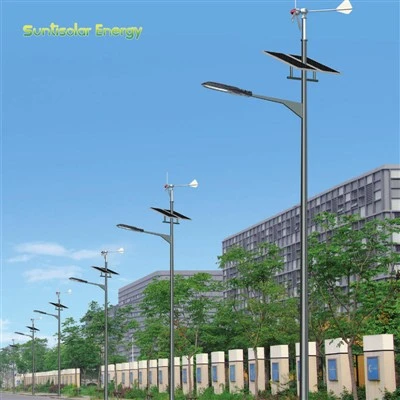
If you’re a landscaper looking to stock these for your clients, or a homeowner ready to make your water feature glow, reach out to our team here at Solar Landscaping Light. We can walk you through the different models, help you pick the right ones for your space, and answer any other questions you have. No sales pitches, just straight talk—like I said earlier, I’ve been in this game long enough to know what works, and what doesn’t.
Split Solar Street Light Now, I know some of you are still curious, so here are the sources I used to make sure I got all the science right, no just guessing like that first time:
- International Electrotechnical Commission (IEC) 60529: Degrees of Protection Provided by Enclosures (IP Code)
- US Department of Energy Solar Energy Technologies Office: Photovoltaic Performance in Aquatic Environments
- National Sanitation Foundation (NSF)/ANSI Standard 61: Drinking Water System Components – Health Effects (for water-safe seal materials)
- Marine Environmental Research Institute: Corrosion Resistance of Lighting Materials in Fresh vs. Saltwater Environments
- Solar Landscape Lighting Association: Submersible Light Installation and Maintenance Guidelines
Yantai Xutai New Energy Technology Co., Ltd.
Yantai Xutai New Energy Technology Co., Ltd. is one of the most professional solar landscaping light manufacturers and suppliers in China. With a professional production team, we are able to meet the needs of the majority of our customers. Please rest assured to buy premium solar landscaping light made in China here from our factory.
Address: No.229, Tongshinan Road, Zhifu District, Yantai City, Shandong Province, China
E-mail: Joe.chu@suntisolar.com
WebSite: https://www.suntisolar.com/
