Hey there, it’s Jake from your go-to thermocouple wire cable supplier, and I’ve lost count of how many times new clients (and even some old heads in the game) hit me up going, “Wait—what even makes thermocouple wire? I thought it was just two wires wrapped up?” Nah, man—you’d be shocked how much goes into that tiny, unassuming cable that’s keeping furnaces, food processing lines, lab test rigs, and even oil rigs’ temp checks on point. Mess up the materials, and suddenly your readings are off by 50 degrees, or the wire melts mid-shift, costing you thousands in downtime. I’ve seen it happen, and today I’m breaking down the real, science-backed stuff we use to make these cables, no fancy jargon (unless it’s actually necessary, I’ll keep that to a minimum). Thermocouple Wire Cable

First off, let’s keep it simple: a thermocouple is basically two different metal wires welded together at the tip, right? That junction spits out a tiny voltage proportional to the temperature it’s exposed to—so each metal pair has to be matched perfectly, or that voltage’s garbage. But we’re not just talking those two inner wires here; the whole cable has layers, all with their own job. Let’s start with the core because that’s where the magic happens: the thermoelement wires.
These aren’t your average copper wire you buy at Home Depot. They’re special alloys—mixes of metals blended to handle specific temps, environments, and voltage output. The most common types, and the ones we stock 90% of the time, are Type K, Type J, Type T, Type E, Type N, and the noble metal ones like Type S, R, B. Let’s get into the key ones since that’s what most folks need.
Type K is the workhorse, no cap. You’ve probably used these if you’ve ever done any moderate temp work—like 200 to 2300°F. The positive wire here is chromel, which is a mix of 90% nickel and 10% chromium. The negative is alumel: 95% nickel, 2% aluminum, 2% manganese, 1% silicon. Why mix that? Chromel and alumel create a stable voltage pair, and they’re cheap, easy to source, and hold up to pretty much everything except high sulfur environments (don’t put Type K in a coal furnace, that’ll eat the wires fast). We use Type K for like 60% of our orders because it’s versatile for everything from HVAC systems to food ovens to general industrial monitoring.
Next up is Type J, another workhorse but different. Type J uses iron as the positive wire and constantan as the negative. Wait, constantan’s a big one—let’s not gloss over that. Constantan is a copper-nickel alloy, usually 55% copper and 45% nickel, super stable at moderate temps. Type J is great because iron gives it more voltage output than Type K in lower ranges, like -300 to 1400°F, and it’s way cheaper than the noble metal types. The catch? Iron rusts. Bad. So if you’re putting Type J in a humid environment or outdoor spot where it’s exposed to moisture, you need extra coating—otherwise the inner wire rusts, breaks, and your temp readings die. I’ve had a client learn that the hard way; they used Type J in an uninsulated paint booth in Florida, and within 3 months the wires corroded. Lesson learned.
Type T is for low temp work, like refrigeration, cryogenic testing, or food storage freezers, down to -450°F. Its two wires are copper (positive) and that same constantan negative from Type J. The copper here is pure, oxygen-free copper too—regular copper has impurities that mess with low-temp voltage. Type T is super stable, no rust issues like Type J because there’s no iron, and it’s accurate down to super cold temps. We keep tons of Type T on hand for food processing plants that need to check cold storage freezers or blast freezers for frozen goods—can’t afford a temp reading error when you’re dealing with perishables.
Now the high temp heavy hitters: the noble metal types, Type S, R, B. These are the ones for furnaces, kilns, metal heat treating, stuff that hits 2600°F and up. Type S and R use platinum-rhodium alloys. Positive wire for S is 90% platinum, 10% rhodium; negative is pure platinum. R is almost the same, just a tiny bit more rhodium (13% in the positive) for slightly better accuracy at super high temps. Type B is even higher—up to 3100°F—positive is 70% platinum, 30% rhodium, negative is 94% platinum, 6% rhodium. The tradeoff here? These are way more expensive because platinum is pricey, and rhodium isn’t cheap either. But if you try to use Type K in a furnace that hits 2500°F, it’ll oxidize, turn brittle, and snap in days. Noble metals don’t oxidize at those temps, so they last way longer. We only sell these when a client specifically needs ultra-high temp, because they’re a big investment, but worth every penny for stuff like steel mills or glass manufacturing.
Wait, hold on—those inner wires aren’t just floating around inside the cable, right? They need insulation. That’s the next material layer, and it’s just as important as the wires themselves. The insulation has to keep the two inner wires from touching each other (that’s a short, dead readings) and keep out moisture, chemicals, whatever’s in your working environment, plus handle the temp the inner wires are seeing.
For general moderate temps, like Type K or J used in dry industrial spots, we use fiberglass insulation. Fiberglass is cheap, handles up to like 1800°F, works great in air or dry environments. It’s flexible too, so you can run the cable around tight pipes or machinery without it cracking. But if there’s moisture, fiberglass soaks it up like a sponge. So for wet environments—like food processing, outdoor use, even underwater sometimes—we switch to PTFE insulation, more commonly known as Teflon. Teflon is non-porous, so it keeps moisture out, handles up to 500°F, and resists chemicals like oils, acids, cleaning solutions. That’s the go-to for a lot of food industry clients because it’s FDA-approved too—no weird leachables getting into their product if the cable is close to food.
For ultra-high temp applications with noble metal thermoelements, we use ceramic insulation. Ceramic handles way hotter than Teflon or fiberglass, like up to 3000°F, no problem. It’s solid, though, so the cable is less flexible—you can’t bend it around tight corners, but who cares if it’s running inside a fixed furnace wall or a kiln where there’s no need for movement. Ceramic is also really resistant to oxidation, which is why it pairs perfectly with platinum-rhodium wires that need to stay hot all the time.
Then there’s the outer jacket, the outermost layer that protects the whole thing from physical damage, abrasion, chemicals, whatever’s knocking around your work area. This is the last line of defense. We pick the jacket material based on how rough the environment is. The basic one is PVC, which is cheap, works up to like 140°F, resists minor abrasion. That’s fine for a simple HVAC duct temp check that’s run out of the way. But if you’re dragging cables around a factory floor, or they’re exposed to oils or solvents, we use polyurethane (PU) or chloroprene rubber (neoprene). Neoprene can handle temps down to -40°F and up to 200°F, resists oil and corrosion, way tougher than PVC. PU is even more abrasion-resistant, so it’s good for industrial settings where cables get stepped on, run over by forklift forks, or dragged across concrete all day.
Wait, did I miss anything? Oh, right—for some specialty cables, especially those used in harsh environments like offshore oil rigs or chemical plants, we add an extra metal shielding layer, usually copper or steel braid. The shielding blocks electromagnetic interference (EMI) and radio frequency interference (RFI). Those rigs have tons of power lines and electronics that can mess with the tiny voltage the thermocouple is putting out. No shielding, and your reading is all over the place because of interference. The braid also adds a little extra physical protection, so it’s double duty. I can’t tell you how many times a refinery client has called me saying their temp readings were garbage, and we traced it to missing shielding in their old cable. We send them the shielded version, and boom, readings are back to normal.
Let me also hit on a common misconception: “I can just use any two wires that hit the right temp, right?” No way. The alloy pairs are calibrated. Even if you mix a chromel wire with constantan instead of alumel, you get a totally different voltage output, so your temp will be wrong. That’s why we test every single cable before it leaves our shop—we check the voltage output at multiple temp points to make sure it matches the type it’s supposed to be, so our clients don’t have that problem. I’ve had a client try to save a few bucks by cutting corners on wire alloy, and within a week their $10k batch of metal parts was ruined because the temp reading was off. Don’t do that. The materials aren’t random—they’re calibrated for a reason.
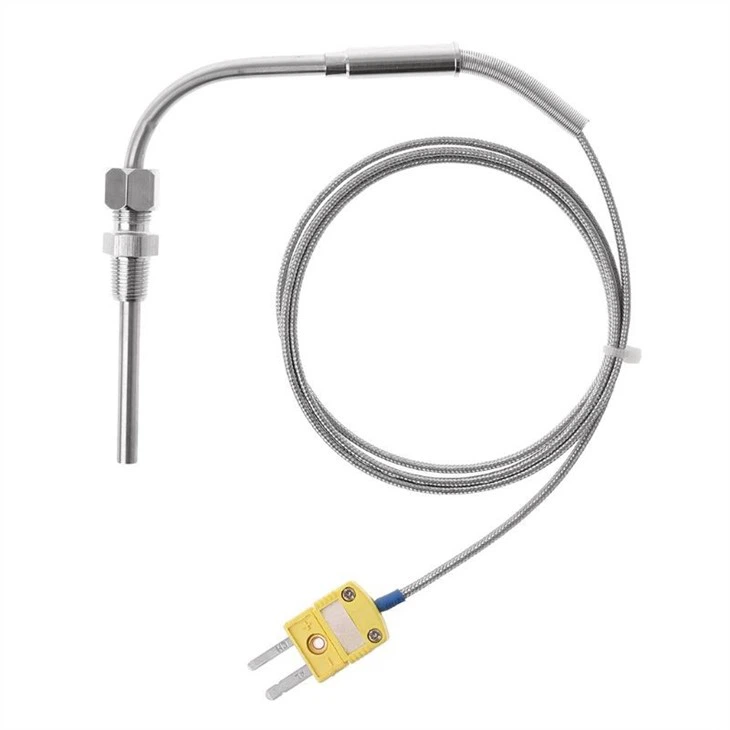
Now, let’s talk about what we don’t use, just to clear the air. We don’t use cheap, untested alloys that some random supplier might pass off as Type K. Those have impurities that make them brittle, so they break easily, even at normal temps. We don’t use plastic insulation for high temp jobs, because it melts and causes a short or a fire. And we never skip shielding when it’s needed—even if a client says “our readings are fine without it,” I’ll show them the EMI source in their plant, explain the risk, and they almost always upgrade. That’s the kind of supplier I am—no upselling for no reason, just telling you what works.
Temperature Gauge At the end of the day, thermocouple wire cable is way more than two wires and some plastic wrap. It’s a custom mix of alloys, insulation, jackets, sometimes shielding, all engineered to work in specific conditions. Mess up any part, and you’re looking at downtime, ruined product, safety hazards, all that good stuff. We’ve been in this game long enough to know exactly what materials to use for every job, no guesswork. If you’re shopping for new thermocouple cable, or you’re having issues with bad readings or broken wires, hit us up. We can help you pick the right materials for your exact application, no pressure, no fine print. Don’t wait till your temp check fails—reach out now to get the right cable for your needs.
References
- Thermocouple Materials and Types, National Institute of Standards and Technology (NIST)
- Insulation and Jacketing for Thermocouple Cables, Omega Engineering
- Industrial Thermocouple Performance and Material Selection, ISA (International Society of Automation)
Chongqing Haichen Instrument Co., Ltd.
Chongqing Haichen Instrument Co., Ltd. is one of the most professional thermocouple wire cable manufacturers and suppliers in China for over 20 years, featured by good service and competitive price. Please rest assured to buy high quality thermocouple wire cable for sale here from our factory. For customized service, contact us now.
Address: No.11 Gusheng Road, Caojie Street, Hechuan District, Chongqing City, P.R. China
E-mail: sales@hcsensor.com
WebSite: https://www.hcsensor.com/
