If you’ve ever ordered MPP (Modified Polypropylene) power conduit pipes for your electrical or infrastructure projects, you know how easy it is to take their durability for granted. I’m Jake, been running my family’s MPP pipe supply business out of Ohio for 12 years now, and I’ll never forget the day a delivery driver called me panicking about a load of 20-foot MPP pipes—they’d shifted mid-route, cracked three joints, and left me with a $1,200 loss (and a very unhappy customer). That mistake taught me more about MPP pipe transport than any manual ever could, and today I’m sharing what I’ve learned to keep your pipes intact, your projects on schedule, and your wallet happy. MPP Pipe

First, let’s get one thing straight: MPP isn’t just a plastic pipe. It’s a rugged, heat-resistant material designed to protect underground electrical and telecom cables, so it can handle a lot—if it’s treated right. The same flexibility that makes it good for bending around utility lines also makes it prone to kinking, scratching, or cracking if you don’t secure it properly during transport. Over the years, I’ve worked with truckers, field crews, and even engineering teams to refine our transport process, and now every load that leaves our warehouse has a checklist that’s been battle-tested across hundreds of deliveries.
Start with Pre-Transport Planning: Measure Twice, Load Once
The biggest mistake I see new shippers make is grabbing a truck and loading up without planning. MPP pipes come in two standard sizes for most projects: 20-foot lengths for residential and small commercial jobs, and 40-foot lengths for large commercial or utility-scale projects. You can’t just cram 20-foot pipes into a 40-foot flatbed and call it a day—you have to account for their diameter, weight, and how they’ll stack.
For 20-foot pipes, we use a 12-foot flatbed truck for small orders (under 50 pipes) and a 24-foot flatbed for larger bulk orders. The key here is that the load can’t overhang the edges of the truck by more than 6 inches per side—state and federal DOT rules vary, but overhanging loads not only risk fines, they’re way more likely to shift if a driver has to slam on brakes or swerve. For 40-foot pipes, we exclusively use 53-foot long flatbeds or extendable drop-deck trailers, because those have the length to accommodate full pipe lengths without cutting them or forcing them to bend. Cutting MPP is a last resort—it weakens the joints and makes them more likely to crack underground, so we always encourage planning for full lengths when possible.
Next, Sorting by Diameter and Weight is Non-Negotiable
MPP pipes come in diameters from 2 inches all the way up to 24 inches, and their weight increases dramatically with size. A 2-inch pipe weighs about 2 pounds per foot, while a 24-inch pipe is closer to 25 pounds per foot. Stacking a heavy 18-inch pipe on top of a stack of 4-inch pipes is a recipe for disaster—it’ll crush the smaller pipes’ walls, creating hidden dents that won’t show up until you’re trying to pull cable through them weeks later.
My team sorts every order by diameter first, then by length. We stack smaller, lighter pipes at the top of the stack, and larger, heavier ones at the bottom. For pipes with 12-inch diameters or more, we don’t stack more than two high—any higher, and the lower pipes can get deformed under the weight, even if they’re not cracked. For smaller pipes (under 6 inches), we can stack up to four high, but only if we add a layer of corrugated cardboard between each stack to prevent the ends from scratching each other. Scratches on MPP pipe ends don’t sound like a big deal, but they make it almost impossible to get a tight, leak-proof joint when you’re connecting them in the ground, which can lead to water damage and cable failure months down the line.
Securing the Load: The “Three Anchor” Rule I Swear By
Once the pipes are stacked correctly, the next step is securing them—and this is where most accidents happen. I’ve seen loads where someone tied a single strap around the middle of the stack, and the pipes shifted so much that the ends poked through the side of the truck. Here’s the rule I developed after that 2011 mishap: every MPP pipe load needs three separate anchor points, regardless of size.
First, front anchors: we use two heavy-duty woven nylon straps (rated for at least 5,000 pounds each) that wrap around the very front of the stack, not the middle. We loop the straps through the metal D-rings on the truck’s front rail, and tighten them until the stack doesn’t wiggle at all when you push it with your shoulder. For extra security, we add a piece of rubberized padding between the strap and the top of the front pipe—this prevents the strap from digging into the plastic and causing scratches or stress marks that can lead to cracking later.
Second, side anchors: for flatbed loads, we use at least two side straps, one near the front third of the stack and one near the back third. For loads with 40-foot pipes, we add a third side strap in the middle, just to be safe. We never use rope or bungee cords here—they stretch too much during transit, especially if you’re driving on bumpy backroads. Bungees might work for a few small pipes on a weekend job, but for bulk orders, straps are non-negotiable.
Third, back anchors: just like the front, we wrap two heavy-duty straps around the very back of the stack, securing it to the truck’s rear rail. The goal with all three sets of anchors is to make the load as immovable as possible—if you can lift one end of the pipe stack a quarter inch, you’re not tight enough. We test every load before it leaves the warehouse by having one team member stand at the front and another at the back, shaking the stack as hard as they can. If any pipe moves, we re-tighten the straps.
Special Considerations for Long Hauls and Bad Weather
If you’re delivering MPP pipes over 500 miles, or if there’s rain, snow, or extreme heat in the forecast, you have to adjust your process. Last summer, we had a load going to a construction job in Arizona, where temperatures hit 110 degrees during the day. MPP softens in heat—its melting point is around 320 degrees, but even high temperatures can make it more flexible and prone to bending out of shape. For that load, we added extra padding between every pipe and added an extra set of middle straps, and we scheduled the delivery to leave at 2 a.m. so the pipes would cool and stay rigid during transport.
In wet or snowy conditions, we always cover the entire load with a heavy-duty weather tarp, but we leave the back of the tarp slightly open—trapping moisture under the tarp can cause mold to grow on the pipe ends, which makes them slippery and hard to connect once they’re in the ground. We also never leave MPP pipes on the back of a truck overnight if it’s going to freeze—frost can get into the joint grooves and cause the plastic to become brittle, leading to cracks when you’re handling the pipes on-site.
On-Site Unloading: Don’t Cut Corners Here Either
I know we’re talking about transport, but unloading is part of the process too—how you take the pipes off the truck can make all your prep work for nothing. I’ve seen crews use a forklift to grab the middle of a stack of 40-foot pipes, and the weight of the stack caused the bottom pipes to crack at the joints. The right way to unload MPP pipes is to use a fork truck with spreader bars that go under the individual pipes, not the stack. For smaller orders, we use a manual hoist with soft slings (not metal chains) to lift the pipes—metal chains will scratch or dent the plastic, even if you don’t see it at first.
Another rule we teach our clients: never drag MPP pipes across the ground. Even a gravel lot can scratch the pipe’s exterior, and those scratches can lead to chipping when you’re bending the pipe to go around obstacles. If you have to move pipes on-site, use dollies with rubber wheels or lay down plywood to create a smooth path.
What We Do for Our Regular Clients
At our business, we don’t just sell MPP pipes—we offer free transport guidance to every customer, whether you buy one pipe or 100. For local deliveries within 100 miles, we even use our own fleet of flatbed trucks and trained drivers, so you never have to worry about hiring a third-party carrier that doesn’t know how to handle MPP. For out-of-state orders, we work exclusively with carriers that specialize in construction material transport, and we provide them with a custom checklist every time, so there’s no confusion about how to secure the load.
I’ll be honest—every once in a while, a load gets damaged. The roads in Ohio are terrible in the winter, and sometimes a pothole hits just right, even with the tightest straps. But over the years, our damage rate has dropped from 8% when we started to less than 1% now, all because we stuck to the simple steps I laid out here. The key is treating MPP pipe like the precision product it is—it’s not just a hunk of plastic, it’s a critical part of making sure power and telecom lines stay safe and functional for decades.
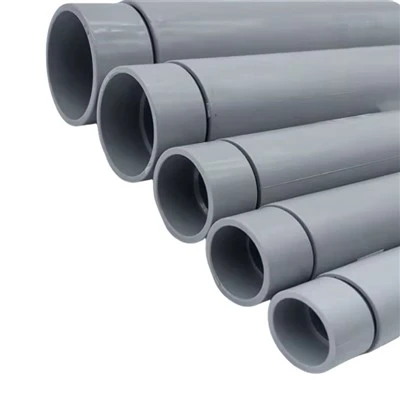
If you’re gearing up for an infrastructure project, whether it’s a residential subdivision, a commercial office building, or a utility-scale solar farm, you don’t want to deal with damaged pipes that delay your timeline or cost you extra money. We have a full inventory of MPP pipes in all diameters and lengths, ready to ship when you need them. To get a quote, or to ask any questions about transport, loading, or installation, reach out to our team today. We’re here to make your project go as smoothly as possible, from our warehouse to your job site.
PP-R Pipes and Fittings References
- National Association of Pipe and Fabricators. (2020). Safe Transport Practices for Thermoplastic Utility Pipes. Industry Guidelines Series.
- American Road and Transportation Builders Association. (2019). Overheight and Overwidth Load Standards for Construction Materials. Federal DOT Compliance Manual.
- MPP Pipe Manufacturers Association. (2021). Installation and Transport Best Practices for Modified Polypropylene Conduit. Product Safety Report.
- Occupational Safety and Health Administration. (2018). Material Handling Guidelines for Construction Sites. OSHA 29 CFR 1926 Subpart CC.
Shanxi Kaisheng Plastic Co., Ltd.
Shanxi Kaisheng Plastic Co., Ltd. is one of the most professional mpp pipe manufacturers and suppliers in China, featured by quality products and good price. Welcome to buy durable mpp pipe made in China here and get quotation from our factory. We also accept customized orders.
Address: No. 72, Area S, Gate 1, Haohai Wumart, Fendong Street, Xiaodian District, Taiyuan City, Shanxi Province
E-mail: sxkssj8@163.com
WebSite: https://www.sxksgys.com/
