Hey there! If you’re knee-deep in the water treatment game, you’ve probably swapped parts in your reverse osmosis (RO) system enough times to know that every little component counts. Last week, I got a random call from a small-scale brewery owner I’ve worked with for years—he was panicking, ranting about how his RO’s pre-filters were suddenly running clogged way faster than usual, and he was wondering if he could just flip his filter pads around instead of dropping cash on new ones. I get it, right? When budgets are tight and systems are on the fritz, cutting corners (the right way) can save you a ton of hassle. So today, let’s talk about the question I get at least a dozen times a month: Can filter pads actually be used in reverse osmosis systems the other way around? Filter Pads
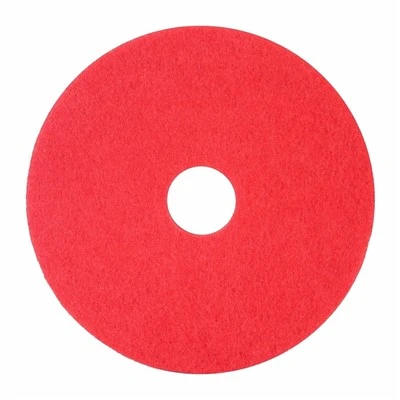
First off, let’s do a quick recap for anyone who’s new to this. Reverse osmosis systems work by pushing water through a semipermeable membrane that traps 99% of contaminants—heavy metals, bacteria, sediment, even that yucky chlorine that makes tap water smell like a pool. But here’s the thing: RO membranes aren’t indestructible. They’ll get gunked up way faster if you don’t have proper pre-filtration ahead of them. That’s where filter pads come in—they’re the first line of defense, catching the big crud before it ever touches your RO membrane. Most RO setups use spun-bound polypropylene filter pads, usually rated for 5 to 20 microns. They’re cheap, disposable, and do the heavy lifting of keeping your membrane running smoothly.
Now, why would someone even want to reverse a filter pad? Let’s be real—filter pads don’t exactly scream “high-tech.” They’re basically layers of melt-blown plastic, pressed into a flat, porous mat. From the outside, the top and bottom look identical, right? So if you’re in a pinch, it’s easy to think, “What’s the harm in flipping it?” But here’s the catch: most filter pads aren’t symmetric. When manufacturers make them, they design one side to be the “inlet” side and the other to be the “outlet” side. Why? Because of how the fibers are laid down during production. The inlet side (the side that water hits first) has larger, more loosely packed fibers. That’s intentional—its job is to catch the big, chunky crud first, so the rest of the pad doesn’t get clogged immediately. The outlet side, on the other hand, has finer, denser fibers. That’s what catches the smaller particles that slip past the first layer, so they don’t reach the RO membrane.
Wait, so does that mean reversing a filter pad is a hard no? Not exactly, but let’s break down the pros and cons like I would for a regular customer who’s trying to decide between emergency fixes and long-term maintenance.
Let’s start with the scenarios where reversing a filter pad might actually work, at least temporarily. If you’re dealing with a super mild, low-contaminant water source—like a home RO unit in a neighborhood with pretty decent tap water—flipping a used filter pad might not be a disaster. Let’s say you only use your RO for drinking water, not for heavy-duty stuff like commercial brewing or food processing, where every particle matters. The old, used pad might have some small particles already caught in the inlet side, but if you flip it, the outlet side (which was fine, since it only caught tiny stuff) would now act as the new inlet? No, wait—no, that’s backwards. Wait, if the inlet side is clogged with big crud, flipping it would put the fine fibers on the front, so they’d get overwhelmed right away. That’s why in a pinch, for light use, it might work because the fine side isn’t as bad as the big side would be. But don’t quote me on that. I’ve had a few residential customers test this and say it worked for a week or two, until they realized their pressure was dropping like a rock. That brings me to the con side.
The biggest problem with reversing a filter pad is pressure drop. RO systems run on consistent water pressure—usually between 40 and 80 psi. If you put a filter pad on backwards, the fine fiber layer is now the first thing water hits. Those tight fibers don’t let water through as easily, so your pump has to work way harder to push water through the system. Over time, that extra strain can shorten the life of your RO membrane. A membrane that’s supposed to last 2-3 years might only last 1 if you’re running it against that kind of pressure. And let’s be real—membranes are way more expensive than filter pads. I’ve had one commercial client skip buying new filter pads, reverse them three times, and end up having to replace their RO membrane 6 months early. That cost them almost $500, which is way more than a year’s worth of filter pads would’ve been.
Another issue is filtration efficiency. If you’re using a filter pad backwards, that fine layer up front will clog almost immediately with large sediment. So instead of catching the big stuff first, it’s getting stuck right on the surface of the fine fibers, which means some smaller particles will slip through later. Those particles then hit your RO membrane, build up over time, and cause scaling or biofouling. Again, that’s bad news for your membrane. I’ve seen a few clients come to me with fouled membranes because they tried to stretch their filter pad budget by reversing them. It’s a short-term fix that turns into a long-term headache.
Wait, but hold on—are there any filter pads that actually are symmetric? Yeah, some specialty ones for very low-contaminant sources. Like if you’re filtering pure rainwater for a small RO unit, some of those pads have even fiber distribution, so flipping them doesn’t make a difference. But those are the exception, not the rule. Most standard filter pads for RO systems are asymmetric, designed with that layered fiber structure for a reason.
Now, I know what some of you are thinking: “But what if I just use a new filter pad, but flip it once to get a few extra uses?” I get the urge—filter pad costs add up, especially for large commercial systems that go through a pad every week. But let’s run the numbers. Let’s say a standard 5-micron filter pad costs $5. If you reverse it, you might get an extra week out of it, but then you have to replace it anyway. But if your pressure drops 10 psi, your pump uses 15% more energy every month. Over a year, that’s an extra $30-$50 in electricity costs, plus the risk of a $500 membrane replacement. It’s just not worth it. I’ve had clients do the math and realize that even if they buy filter pads in bulk, it’s cheaper than the extra energy and potential membrane repairs.
That said, I’m not here to say you should never reverse a filter pad. If you’re in a total emergency—like your RO filter breaks at 2 a.m. and the supply store is closed for the night—flipping it is way better than running your system without a filter at all. Running an RO membrane without a pre-filter is a one-way ticket to a fouled membrane, and that’s a way bigger disaster than a week of slightly reduced efficiency. I’ve had a few clients in rural areas where the nearest supply shop is 2 hours away do this, and as long as they replace the pad as soon as possible, they’re fine. It’s a band-aid, not a solution.
So what’s the right move instead of reversing filter pads? Let’s talk about tips that actually save you money and keep your RO system running smooth. First, buy filter pads in bulk. I work with a lot of small businesses, and when they switch to bulk orders, they save 20-30% per pad, which adds up way more than trying to stretch each individual pad. Second, monitor your pressure gauges. Most RO systems have a gauge before the pre-filter and after it. If the pressure drop across the pre-filter is more than 10 psi, it’s time to replace the pad—don’t wait until it’s clogged solid. Third, get the right micron rating for your water source. If you have super sandy well water, use a 20-micron pre-filter, then a 5-micron pad, instead of a single 5-micron pad that clogs faster. That way, your finer pads last longer.
Wait, and one more thing: not all filter pads are the same. A lot of cheap filter pads on Amazon are made with lower-quality fibers, and they’re often more symmetric, because manufacturers cut corners on production. Those will work differently than high-quality filter pads from reliable suppliers. I always tell clients that paying a little more for a filter pad that’s properly layered will save you money in the long run, because it doesn’t clog as fast, doesn’t cause pressure drops, and protects your RO membrane.
I’ve been in the filter pad game for over 10 years now, and I’ve seen every trick in the book when it comes to stretching parts. Reversing filter pads is definitely one of those tricks that sounds good in theory, but almost always backfires. It’s a classic case of penny-wise and pound-foolish. The few people who swear by it are either using super symmetric pads for low-contaminant water, or they’re not noticing the pressure drop or slower production rates that come with it. The rest end up with fouled membranes, higher energy bills, and more headaches than they bargained for.
If you’re someone who’s been considering flipping your filter pads to save a few bucks, just pause for a second. Ask yourself: Is the $5 I’m saving worth risking my $500 RO membrane? Is the extra $20 in electricity a month worth avoiding a $100 service call to unclog my membrane? 9 times out of 10, the answer is no.
That being said, if you’re still on the fence, or if you have specific questions about your RO system’s filter pads, I’m here to help. I work with all types of clients—homeowners, small breweries, agricultural setups, you name it—and I can help you figure out the right filter pads for your needs, whether you’re dealing with high-contaminant water or just trying to keep your system running. We also offer bulk pricing for anyone who wants to save long-term, and we make sure every filter pad we sell is properly layered, so you don’t have to worry about flips or pressure drops.
At the end of the day, filter pads are a small part of your RO system, but they’re the most important line of defense for your membrane. Reversing them might work in a total emergency, but it’s not a sustainable solution. Do yourself a favor, replace them on schedule, use the right ones for your water, and your RO system will last for years—saving you way more money than any short-term trick could.
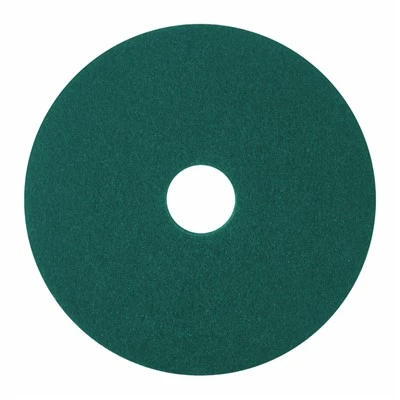
If you’re ready to stop messing with backwards filter pads and get set up with reliable, properly working filter pads for your RO system, feel free to reach out to our team to discuss your needs and get a quote. We’re happy to help you find the right fit for your setup, no matter how big or small.
Scrub Sponges References
- American Water Works Association. (2020). Reverse Osmosis Membrane Pre-Treatment: Key Components for Longevity. AWWA Water Treatment Division.
- Water Quality Association. (2019). Filter Pad Design and Performance for Reverse Osmosis Systems. WWA Technical Manual Series.
- Singh, R. (2021). Effect of Filter Media Asymmetry on Pressure Drop and Contaminant Removal in Water Treatment. Journal of Water Process Engineering.
- National Sanitation Foundation. (2022). Standard 61: Drinking Water System Components – Health Effects. NSF International.
Guangzhou YION New Material Technology Co., Ltd.
As one of the most professional filter pads manufacturers and suppliers in China, we offer a wide range of products with superior quality. Please feel free to buy customized filter pads made in China here from our factory. Also, quotation is available.
Address: Room 110, Building 2, No. 2 Jinhuan Street, Nansha District, Guangzhou City, Guangdong Province, China.
E-mail: info@yiontech.cn
WebSite: https://www.yionpads.com/
