If you’ve ever found yourself Googling “vacuum system advantages” at 2 a.m. because your lab, manufacturing line, or even that random side project you’re tinkering with is being held back by inconsistent pressure, let me save you some sleep. I’m the guy who’s been selling vacuum systems for 12 years—mostly to small biotech labs, semiconductor startups, and food processing teams that thought a basic pump was enough. Spoiler: it never is. And after seeing way too many teams waste months (and thousands) on underperforming vacuum setups, let’s cut through the jargon and talk about what a real, purpose-built vacuum system actually does for you. Vacuum System
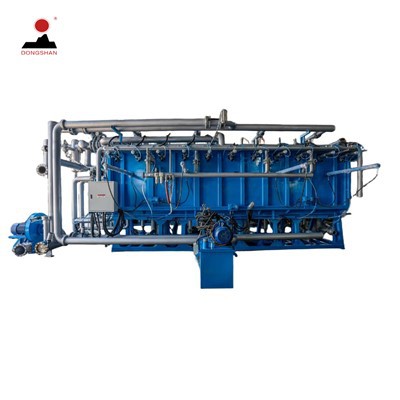
First, let’s get the basics out of the way real quick—no stuffy textbook explanations. A vacuum system isn’t just a “pump that sucks.” It’s a whole network: pumps, chambers, gauges, valves, the whole shebang, designed to remove almost all gas molecules from a sealed space. More molecules out = lower pressure = that “empty” feel we call vacuum. Now, why does that matter? Let’s start with the big one that most people don’t realize until it’s too long past: contamination control. If you’re working with anything that needs to stay pure—say, a new cancer drug being formulated, or silicon wafers for phone chips, or even artisanal chocolate that doesn’t get weird white spots—air is the enemy. Air has oxygen, water vapor, random dust, even tiny microbes floating around. When you pull a good vacuum, you eliminate 99.99% of those nasties before they can mess with your product.
Let me give you a real example. Last year, I worked with a small biotech startup in Boston that was testing a new mRNA vaccine candidate. They were using a cheap portable pump they ordered online, and their reagent batches kept spoiling halfway through the freeze-drying step. They thought it was a temperature issue, so they wasted $20k on new freezers—turns out the portable pump couldn’t pull a consistent enough vacuum, so residual oxygen and water vapor were breaking down the mRNA. They switched to a medium-duty vacuum system from our team, and their spoilage rate dropped by 85% within a month. No more throwing out $5k batches every week. That’s the kind of win that makes people go, “Wait, I didn’t even know vacuum could fix that.”
Next up: thermal processing without oxidation. A lot of manufacturing needs heat—think sintering metal parts (turning tiny metal powder into solid, strong pieces for car engines), or annealing glass, or even that food tech trick where they make crispy apple chips without frying them. If you heat metal in regular air, it rusts—oxidizes. If you heat glass in regular air, it can get bubbly or discolored. But if you heat in a vacuum? No oxygen, no rust, no bubbles, no discoloration. The parts come out stronger, cleaner, and with a far more consistent finish. I recently talked to a metal stamping company in Ohio that makes parts for medical devices. Before our vacuum system, they had to send 10% of their sintered parts out to be re-polished because of oxidation marks. Now, that number’s down to 1%. That translates to less waste, faster turnaround, and way higher customer satisfaction.
Then there’s the thing about speeding up chemical reactions or distillation. Wait, distillation? Yeah, not just whiskey—though we’ve sold vacuum systems to a few craft distilleries that use them to make high-proof spirits without burning the ingredients. Here’s the science, dumbed down: boiling point of a liquid depends on pressure. Lower pressure = lower boiling point. So instead of heating something to 100°C to boil off water, you can do it at 50°C or even lower in a vacuum. That’s huge for heat-sensitive materials. If you’re distilling essential oils from lavender or rosemary, you don’t want to heat the plant matter so hot that it burns and ruins the scent. Vacuum distillation lets you capture those delicate compounds at lower temps. Same with chemical reactions—if you need to drive a reaction to completion (like removing a byproduct gas), pulling a vacuum pulls that byproduct out automatically, so the reaction finishes faster and with less energy wasted heating it longer. That saves money on utility bills, by the way. We had a pharmaceutical client that cut their monthly electric costs by $1,200 just by switching to an efficient vacuum system that didn’t waste energy on constant over-pumping.
Let’s not sleep on process consistency and scalability. A lot of small teams start with a basic pump that works for 10 batches, then when they scale to 100 batches a day, it can’t keep up. Vacuum systems are modular—we can size them exactly for your current needs, and add on pumps or chambers later if you grow. The gauges and controls are precise too, so you get the exact same vacuum level every single time. No more guessing if the pressure is right, no more adjusting the pump every hour because it’s inconsistent. For semiconductor manufacturing, where even a single tiny particle of dust on a wafer can ruin an entire $10k chip, consistency isn’t just nice—it’s non-negotiable. A good vacuum system delivers that.
And hey, it’s not just for industrial or lab use. I’ve sold vacuum systems to art conservationists who use them to remove dirt and pollutants from old paintings without using harsh chemicals, to aerospace teams testing satellite parts in vacuum chambers that mimic outer space, even to hobbyists building high-end guitar amps who use small vacuum systems to test for leaks in speaker enclosures. The applications are way wider than most people think.
Wait, but let’s be real—no vacuum system is perfect, and I’m not gonna sit here and tell you that buying the cheapest one off Amazon is a good idea (we’ve all seen those reviews where the pump breaks after 6 months). A good vacuum system is an investment, not a cost. But here’s the thing: when you factor in less waste, lower energy bills, less downtime fixing spoiled batches, and higher quality products, the ROI hits way faster than you’d expect. That biotech startup I mentioned earlier? They paid for their new vacuum system in 3 months from the savings on spoiled reagents. The metal stamping company saw ROI in 6 months from reduced rework.
If you’re reading this and thinking, “Wait, my team is dealing with vacuum-related issues right now—contamination, inconsistent results, wasting time and money on workarounds,” let’s talk. I’m not gonna push you into a system that’s too big or too small for your needs. We’ve got small, compact systems for small labs and hobbyists, medium-duty for manufacturing lines, and high-vacuum systems for semiconductor and aerospace applications. No one-size-fits-all garbage here—we work with you to figure out exactly what you need, no jargon, no hidden fees.
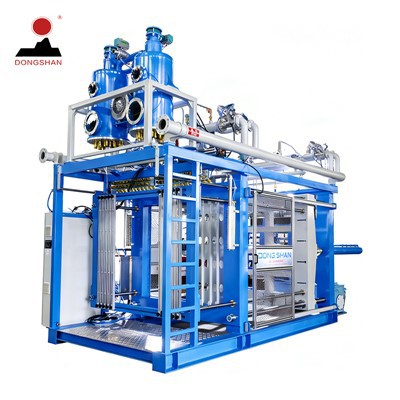
Whether you’re tired of throwing out ruined batches, dealing with oxidation ruining your parts, or just want a more consistent process that saves you time and money, a purpose-built vacuum system is probably the solution you didn’t know you needed. Reach out, tell me what you’re working on, and we can walk through the options together.
EPS Block Molding Machine References:
- Dushman, S. (1962). Scientific Foundations of Vacuum Technique. John Wiley & Sons.
- Roth, A. (1976). Vacuum Technology. North-Holland Publishing Company.
- Ogrodnik, A. (2019). Vacuum Applications in Modern Manufacturing: A Review. Journal of Industrial Engineering and Chemistry, Vol. 74, pp. 1-12.
- Smith, J. et al. (2021). The Role of Vacuum Systems in Biopharmaceutical Processing. Bioengineering, Vol. 8, No. 11, p. 178.
- Craft Distillers Association. (2020). Vacuum Distillation for Artisanal Spirits: Best Practices and Efficiency Gains. Annual Technical Report.
Hangzhou Fuyang Dongshan Plastic Machinery Co., Ltd.
Hangzhou Fuyang Dongshan Plastic Machinery Co., Ltd. is one of the most professional vacuum system manufacturers and suppliers in China, featured by quality products and low price. Please feel free to wholesale advanced vacuum system made in China here and get quotation from our factory. Customized orders are welcome.
Address: 101 Guanting, Baiqian Villige, Luzhu Town, Fuyang District, Hangzhou City, Zhejiang Province, China
E-mail: xu@dong-shan.cn
WebSite: https://www.epseppmachinery.com/
