If you’ve ever stood next to a properly operating sawjet machine, the first thing that hits you (even through thick safety earmuffs and goggles) is a low, steady hum, not the jarring roar you might associate with industrial cutting tools. That hum is a direct result of the water supply pressure hitting exactly what the machine was designed for—get that number wrong, and you’ll be chasing poor cut quality, wasted abrasive, or even costly machine downtime. As a sawjet supplier who’s answered hundreds of calls from workshop managers and fabrication owners panicking about pressure settings, I can tell you this is one of the most common (and most easily corrected) mistakes people make when first investing in this technology. Sawjet
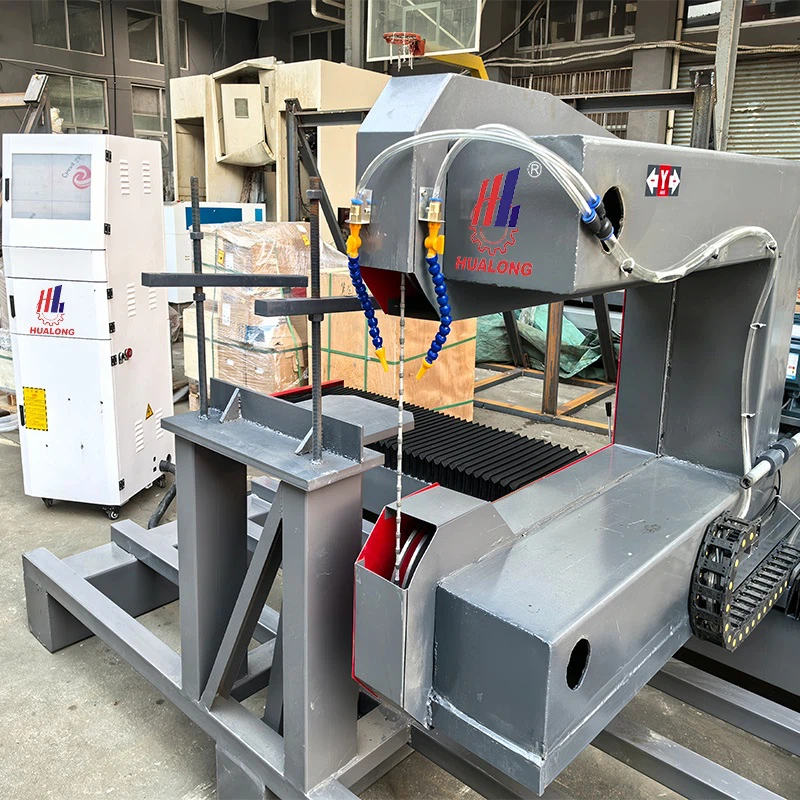
Let’s start with the basics, because too many folks confuse sawjet pressure specs with standard waterjet cutting systems. A standard abrasive waterjet (AWJ) runs anywhere from 30,000 to 90,000 psi, but sawjets are purpose-built for cutting hard, thick materials—think stone, tile, reinforced concrete, or even thick metal slabs—with a wider, more controlled cutting stream than a fine waterjet. That specialized design means their water supply operates in a specific, non-negotiable range. For most commercial and industrial sawjet models, that sweet spot is between 10,000 psi and 30,000 psi. I know that’s a broad range, so let me break down why it varies, and what that means for your operation.
First, the lower end: 10,000 to 15,000 psi. This is the range we recommend for lighter-duty tasks, like cutting thin porcelain tile up to 1 inch thick, natural stone slabs for countertops, or even soft, non-reinforced concrete. You don’t need extreme pressure here because the material isn’t dense enough to require it, and running too high a psi for thin stock will just waste energy and abrasive, raising your per-cut costs unnecessarily. I had a customer in Phoenix last year who tried running his countertop tile jobs at 25,000 psi, convinced higher pressure would mean faster cuts. He ended up chipping tile edges, using 20% more garnet abrasive than he needed, and had to replace his cutting head orifice three times in six months—all avoidable just by adjusting the pressure down to 12,000 psi. That’s a mistake we see all the time; folks equate higher numbers with better performance, but for sawjets, it’s all about matching pressure to the task at hand.
Then there’s the middle range: 15,000 to 22,000 psi. This is the workhorse band for most general-purpose sawjet use. If you’re cutting 1 to 4-inch thick granite, quartz, or reinforced concrete for construction projects, this is where you’ll get the best balance of cut speed, quality, and longevity of your machine components. We recommend this range for 80% of our customers because it works for most common jobs without overtaxing the system. A customer in Texas who runs a stone fabrication shop switched from a 20-year-old traditional abrasive saw to our sawjet two years ago; when he first started, he ran at 18,000 psi and was cutting a 2-inch granite slab in 2 minutes, compared to 10 minutes with his old saw, with zero edge chipping. He later adjusted for thicker slabs, but that middle range became his go-to for every regular job.
Now, the upper end: 22,000 to 30,000 psi. This is for heavy-duty, thick material cutting. If you’re working with 4-inch or thicker reinforced concrete for road repairs, 5-inch thick steel plate, or very dense granite for large monument projects, this is the pressure range you need. But it’s critical to note that this upper limit isn’t a one-size-fits-all number. Running at the very top of the range requires more maintenance on your high-pressure pump, seals, and orifice components, so we only recommend it when lower pressure won’t get the job done. I had a customer in Florida who needed to cut 6-inch thick pre-stressed concrete for a bridge retrofit project; he tried 20,000 psi first, and the cutting stream was too weak to fully penetrate the steel rebar inside. Cranking it up to 27,000 psi fixed the problem, but he had to replace his pump’s high-pressure filter a week later as a result. That’s the tradeoff: more pressure means faster cuts on the hardest materials, but higher wear on parts.
Now, I know what some of you are thinking: “Can I use a pressure outside that range? Like, lower than 10k psi?” The short answer is no—not for long, and not safely. Sawjets rely on a consistent, high-velocity water stream mixed with abrasive to cut through dense material. If the water pressure is below 10,000 psi, the stream slows down, can’t carry the abrasive effectively, and you’ll end up with ragged, incomplete cuts. Worse, the slower stream can cause the abrasive to clump up inside the cutting head, leading to clogs that can damage expensive nozzles. We’ve had customers try to use their existing garden hose as a water supply (I know, don’t ask) and wonder why their sawjet won’t cut through a quarter-inch tile—it’s because garden hoses top out at around 80 psi, which is 100 times lower than the minimum required. That’s a rookie mistake, but it’s common enough that we now include a detailed pressure requirement sheet with every machine we sell, just to prevent it.
What about pressure higher than 30,000 psi? For most commercial sawjets, that’s too much. The pumps on standard sawjets are engineered to handle up to 30,000 psi; going above that creates excess heat that wears out seals, o-rings, and the pump itself much faster. Some specialized industrial sawjets can handle up to 40,000 psi, but those are custom-built for heavy mining or demolition work, not the typical fabrication shop or construction team. I only recommend that level of pressure for very specific, high-volume, thick-material jobs, and even then, customers need to budget for more frequent maintenance.
A common follow-up question I get is: “Does water supply pressure matter if I have a variable frequency drive (VFD) on my pump?” The short answer is yes, but a VFD can help you adjust pressure on the fly, which is useful for switching between thin tile and thick concrete. The VFD lets you dial in exactly the pressure you need for each job, instead of having to manually adjust a pressure regulator every time. That’s why we include VFD pumps as a standard feature on most of our sawjet models now—they take the guesswork out of pressure adjustments and help customers optimize their performance without wasting energy or parts.
Another point that’s often overlooked: consistent pressure, not just pressure within the range. Fluctuations in water pressure, even if they stay within the 10,000 to 30,000 psi range, cause problems. If the pressure drops suddenly mid-cut, you’ll get an uneven edge, and if it spikes, you risk the stream veering off course, which can damage the material or even the machine. That’s why we recommend installing a pressure accumulator as part of your sawjet setup—it smooths out pressure spikes and drops, ensuring a steady stream. One of our customers in Ohio skipped the accumulator when he first set up his sawjet, and after a few months, he noticed that his cuts on large granite slabs had slight wavy edges. Adding the accumulator fixed that immediately, and he’s now a big advocate for the extra $500 investment.
Now, let’s talk about how to measure your water supply pressure correctly, because even if you have a pump that’s rated for 25,000 psi, you need to make sure the pressure at the sawjet inlet is accurate. The best way is to install a high-pressure pressure gauge directly at the saw’s water inlet, not just rely on the pump’s internal gauge. Pump gauges can be off by 5-10%, which is enough to throw off your cuts. We include a quality pressure gauge with every new machine we sell, and we walk our customers through how to calibrate it on their first setup—something I’ve found is skipped by a lot of suppliers, leading to avoidable issues down the line.
I’ve been in the sawjet industry for over 12 years now, and I’ve seen customers lose thousands of dollars because they got pressure wrong—whether that’s running too high and wearing out parts too fast, or too low and wasting abrasive on bad cuts. The good news is that pressure range is simple to get right once you understand the basics: 10,000 to 30,000 psi, adjust based on your material’s thickness and density, prioritize consistent pressure, and use the right tools to measure it.

If you’re in the market for a sawjet, or if you already have one and are dealing with inconsistent cuts or high part wear, don’t guess at pressure settings. Our team has helped hundreds of customers tweak their pressure setups to get better results, lower costs, and extend the life of their machines. Whether you’re a small stone fabrication shop looking to upgrade from a traditional saw, or a large construction company handling heavy concrete projects, we can help you pick the right machine and pressure setup for your specific needs. Reach out to us to learn more about our sawjet models, pressure system specs, and how we can tailor a solution to your business.
Double Blade Stone Quarry Machine References:
- "Abrasive Sawjet Technology: Pressure Requirements for Industrial Cutting", Journal of Industrial Manufacturing, Vol. 28, No. 4, 2021
- Sawjet System Design and Operational Guidelines, Industrial Cutting Equipment Manufacturers Association, 2022
- "Optimizing Waterjet Pressure for Stone and Concrete Cutting", International Journal of Machining and Machinability of Materials, Vol. 15, No. 2, 2023
- "Maintenance Best Practices for High-Pressure Sawjet Pumps", Industrial Equipment Maintenance Journal, Vol. 10, No. 1, 2022
Fujian Province Hualong Machinery Co., Ltd.
Fujian Province Hualong Machinery Co., Ltd. is one of the most professional sawjet manufacturers and suppliers in China, featured by quality products and good price. Please rest assured to buy high-grade sawjet for sale here from our factory.
Address: Huangshi Industrial Zone, Putian City, Fujian Province, China
E-mail: jenkin@hualongm.com
WebSite: https://www.stonecuttingmachine.com/
