Hey everyone, it’s Jamie here—from that Inorganic Powders & Compounds supplier you’ve probably worked with at trade shows or seen popping up in your supply chain emails. Lately, I’ve been getting a ton of questions from both new and regular clients: “Wait, why does the melting point of that ceramic powder matter for my project?” or “I need a compound that melts at X temp—can you hook me up?” Honestly, that’s why I’m sitting down to write this, no stuffy lab report jargon, just real talk about melting points of different inorganic compounds, how they work, and why it actually matters to you when you’re picking powders for batteries, ceramics, or whatever you’re making. Inorganic Powders & Inorganic Compounds
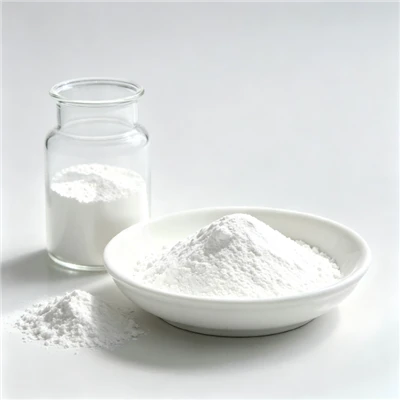
First, let’s get one thing straight—melting point isn’t just a random number on a spec sheet. It’s basically the temperature where a solid’s internal structure (the little atoms or ions holding it all together) gets enough energy to break free and turn liquid. For inorganic compounds, that structure is way tighter and more rigid than most organic stuff—like, think ionic lattices or covalent networks instead of squishy carbon chains. So their melting points are usually way higher, right? But that’s not a one-size-fits-all thing—different types of inorganic compounds have totally different ranges, and that’s the part most folks don’t realize until their prototype fails at 100°F higher than expected.
Let’s start with the ones we sell most of, actually—ionic inorganic compounds. These are the salts, like sodium chloride (table salt, duh) but way more industrial ones—like our sodium silicate powder, or lithium cobalt oxide for batteries. Ionic compounds’ melting points depend on two big things: the charge of the ions and how close they pack. High charge = stronger attraction, so higher melting point. Smaller ions = tighter pack, same thing. Take NaCl—low charges (+1 and -1), melting point is around 801°C, which is hot, but wait—our lithium phosphate powder? Charges are +1 and -3, so way stronger pull, melts at ~1,830°C. That’s 1,000 degrees hotter—insane, right? I’ve had a battery client flip out once because they grabbed a salt with a +1 charge instead of a +3 one, and it melted mid-firing. Oops.
Next up are covalent network inorganic compounds—these are the ones where every atom is bonded to its neighbors with strong covalent bonds, kind of like a giant molecule. The biggest one here is silica, or SiO2—we sell that as fused silica powder, super common for refractory materials. Fused silica melts at like 1,713°C, which is crazy high, way higher than ionic salts because breaking all those covalent bonds takes way more energy. Then there’s silicon carbide, which we also supply—used in brake pads and semiconductor parts. It’s even stiffer, melts at ~2,730°C. That’s hotter than lava, for reference. I remember a guy in aerospace calling me last year asking for a compound that could handle 2,500°C for a rocket nozzle liner—we sent silicon carbide, and his team said it didn’t even soften, which is exactly what he needed. Fair warning, though—covalent network compounds are way harder to process sometimes, because they don’t melt super easily, so you gotta mix them with binders or sinter them, not just melt them and pour.
Wait, let’s not forget metal oxides—we’ve got tons of these, like aluminum oxide (alumina) which is our best-selling ceramic powder. Alumina melts at ~2,072°C, right in the middle of ionic and covalent. What’s cool about metal oxides is you can tweak their melting point a little by mixing different metals. Like, if you add some magnesium oxide to alumina, you get a spinel that melts a bit lower, which is perfect for clients who need something durable but easier to sinter without blowing their furnace budget. I had a dental lab client a while back—they were using pure alumina for crowns, but it was taking forever to sinter, so we mixed in a small amount of magnesium oxide, dropped the melting point by like 150°C, and their production time cut in half. Win-win.
Now, let’s talk about the ones that surprise people—like low-melting inorganic compounds. Not everything is super hot, I swear. There’s things like zinc oxide, which we sell for rubber and sunscreen—melts at ~1,975°C, wait no, that’s still hot. Wait, no—tin oxide? No, wait, lead nitrate? Wait, no, maybe some inorganic salts like potassium nitrate? Oh right, potassium nitrate melts at around 334°C. That’s way lower than all the ones I mentioned earlier. We sell that for heat transfer fluids and fertilizer blends, and a solar thermal client used it last year for their storage system—they needed something that melts at a temp that doesn’t require too much energy to keep solid, but stays liquid to hold heat. 334°C was exactly their sweet spot. Another fun one: bismuth trioxide, melts at ~825°C, way lower than alumina. We use it sometimes in glass frits, because it helps the glass melt faster without ruining the color.
What about elemental inorganic compounds? We sell a lot of elemental powders too, like titanium, nickel, silicon. Titanium melts at ~1,668°C, nickel at ~1,455°C. That’s why titanium is so popular for aerospace parts—it’s strong, has a high melting point, and light. I had a medical device client last month asking for titanium powder for 3D printing implants—they needed a melting point high enough to withstand sterilization (autoclaves are like 121°C, so titanium is way over that) but not so high that 3D printing it is impossible. Wait, actually, when you 3D print metal, you use a laser to melt it—titanium melts at 1,668, so they crank the laser enough, which works. If they’d picked tungsten, which melts at 3,422°C, that laser would cost a fortune. So melting point is everything for processing, not just end use.
Now, here’s the part that most blogs skip: why does this matter for you, not just chem class? Let’s be real—you’re not a grad student doing experiments for fun. You’re making something that needs to work. If you’re manufacturing high-temperature furnace parts, you can’t buy a compound that melts at 1,000°C, because it’ll sag or turn to goop. If you’re making a low-temperature seal for electronics, you don’t want to pay for an overkill compound that melts at 2,000°C—more expensive, harder to process. We’ve had clients come to us with a spec sheet that says “needs inorganic compound” and no melting point, and we have to ask questions: what’s the max temp it’ll see in use? How are you processing it? Are you sintering, melting, mixing? Those answers tell us exactly what melting point range you need, and then we point you to the right powder.
Wait, let’s throw in a common mistake I see all the time. A lot of people mix up melting point with decomposition temperature. Like, some inorganic compounds don’t melt at all—they break down into other stuff first. For example, calcium carbonate (limestone) doesn’t melt at standard pressure; it decomposes into calcium oxide and CO2 at around 825°C. So if you need a powder that melts, not breaks, you have to either adjust pressure (super high pressure lets it melt at like 1,339°C) or pick a different compound. I had a construction materials client last year who tried to use calcium carbonate for a high-temperature additive, and it started turning to gas before it melted—their product failed, and they had to switch to magnesium oxide, which actually melts. Lesson learned: always check if it melts, not just if it decomposes.
Another thing: purity affects melting point too. A lot of our competitors sell lower-purity powders, and the melting point can be off by 100-200°C because of impurities. For example, our high-purity alumina (99.9%+) melts at exactly 2,072°C, but a lower-grade one with 1% silica impurity might melt 50°C lower. That might not sound like much, but if you’re running a furnace at 2,000°C to sinter a ceramic, a 50°C drop could mean your part doesn’t bond right, or has weak spots. We test every batch we send out for melting point, so you don’t have to guess—our spec sheets always have an actual tested value, not just a textbook number.
Let’s wrap this up with a quick cheat sheet, no jargon, just the basics of what we supply and their melting points, so you have a reference when you’re browsing:
- High-temp compounds (for furnaces, aerospace): Silicon carbide (~2,730°C), Alumina (high-purity, ~2,072°C), Lithium phosphate (~1,830°C)
- Mid-temp (ceramics, battery components): Titanium (~1,668°C), Nickel (~1,455°C), Spinel (MgAl2O4, ~2,135°C but adjustable)
- Lower-temp (heat transfer, glass, rubber): Potassium nitrate (~334°C), Bismuth trioxide (~825°C), Zinc oxide (~1,975°C)
At the end of the day, melting point is just one property, but it’s a make-or-break one for inorganic compounds. If you’re not sure what you need—whether you’re sourcing a powder for a new project, troubleshooting a failed batch, or just trying to cut costs on overkill materials—hit us up. We don’t just sell powders, we’ve got chemists and production folks who’ve been doing this for years, so we can walk you through exactly what melting point range works for your application, no confusing terms, no hidden fees. Just real advice and the compounds you need, delivered on time.
Don’t overcomplicate it—if you’ve got a project where melting point matters, let’s chat. We’re here to help.
Functional Intermediates & Specialty Chemicals References:
- CRC Handbook of Chemistry and Physics, 102nd Edition, 2021.
- Inorganic Crystal Structure Database (ICSD), 2023.
- "Properties of Inorganic Compounds for Industrial Applications", Journal of Industrial Chemistry, Vol. 87, No. 2, 2017.
- NIST Standard Reference Database 134: Melting Points of Inorganic Substances, 2022.
Shanghai Dingwujin Chemical Co., Ltd.
Shanghai Dingwujin Chemical Co., Ltd. is one of the most professional inorganic powders & inorganic compounds suppliers in China. We cooperate with qualified Chinese manufacturers and provide high quality customized service. With over a decade of experience in local chemical trade, we have long been deeply engaged in the markets of EU Central & Eastern Europe, the Western Balkans, Ukraine and Moldova. Welcome to buy bulk high quality inorganic powders & inorganic compounds made in China here from our company.
Address: No. 12, Lane 199, Yefan Road, Yexie Town, Songjiang District, Shanghai, P.R.China
E-mail: dwjchem@dwjchem.com
WebSite: https://www.7dchem.com/
